
Can You Use a Patio Heater in a Screened Porch?
This post contains affiliate links. As an Amazon Associate, we earn from qualifying purchases.
That crisp autumn evening on your screened porch shouldn’t end when temperatures drop. Many homeowners face this exact dilemma—wanting to extend their outdoor season while ensuring safety for their family. The good news? You absolutely can use patio heaters in screened porches, but the type you choose and how you install it makes all the difference between cozy comfort and serious safety hazards.
This guide breaks down everything you need to know about safely heating your screened porch, from choosing the right heater type to understanding clearance requirements and ventilation needs. Whether you’re planning weekend gatherings or quiet morning coffee sessions, proper heating transforms your screened space into a year-round retreat.
Screened Porch Heater Safety Fundamentals
Your manufacturer’s safety manual isn’t just paperwork—it’s your essential safety blueprint. Each patio heater model has specific heat ratings, operating conditions, and usage instructions that vary significantly between brands. Ignoring these model-specific guidelines creates preventable fire and carbon monoxide risks in your enclosed space.
Required Clearance Distances for Screened Porches
Measure twice before placing any heater—these clearance requirements are non-negotiable safety standards:
- 2 feet minimum on all sides, including above the heater
- 36 inches from ceiling surfaces for tall heaters
- 10 feet between mushroom-style propane heater tops and ceiling
- 6 feet from combustible materials like umbrellas, wood structures, and cushions
These measurements protect your home from heat damage. Pro tip: Use painter’s tape to mark safe zones on your porch floor before positioning your heater.
Ventilation Assessment Checklist
Your screened porch must meet specific airflow standards to prevent dangerous fume accumulation:
- Two walls completely screened OR three walls at least half-screened
- Consistent fresh air movement you can feel across your skin
- No stuffy or enclosed feeling when seated
If your porch fails this test, installing any gas heater becomes unsafe. Carbon monoxide detectors are mandatory for propane and natural gas units—place one near seating areas and another near the heater.
Best Heater Types for Screened Porches

Electric Space Heaters for Small Enclosed Spaces
Perfect for screened porches under 150 square feet, electric space heaters offer the simplest installation with zero ventilation requirements. These plug-and-play units sit directly on your porch floor and work with standard household outlets.
Key advantages:
– Automatic shut-off and tip-over protection built-in
– No clearance concerns beyond basic safety distances
– Immediate heat without fuel connections
– No emissions to worry about
Position your electric heater toward the open side of your porch for maximum heat distribution and safety. Never drape clothing or towels over electric heaters—this creates immediate fire hazards.
Infrared Heating Systems for Drafty Environments
Infrared technology heats objects and people directly rather than wasting energy warming air. These systems excel in screened porches where breezes would defeat traditional heaters.
Mounting options to consider:
– Wall-mounted units save valuable floor space
– Ceiling-mounted systems provide even heat distribution across dining areas
Both configurations use heated quartz elements to deliver energy-efficient warmth. Infrared is particularly effective for maintaining comfort when screened porch doors remain open.
Propane Patio Heaters for Medium to Large Spaces
Propane heaters deliver serious heat output for screened porches but demand strict safety protocols. Mushroom-style units stand 7-8 feet tall and provide maximum coverage.
Critical safety notes:
– Requires 20-pound propane tanks positioned below the heater
– Must angle toward the porch’s open side
– Needs 10 feet minimum ceiling clearance
– Carbon monoxide detectors mandatory
Tabletop propane units work well for intimate seating areas but still require proper clearance measurements. Never use propane heaters in completely enclosed spaces—this creates immediate carbon monoxide risks.
Natural Gas Heaters for Permanent Installations
For screened porches exceeding 300 square feet, natural gas heaters provide superior heat without tank refills. These systems connect directly to your home’s gas line for continuous operation.
Installation essentials:
– Professional gas line connection is non-negotiable
– Must comply with local building codes
– Higher upfront costs but lower long-term operating expenses
– Carbon monoxide monitoring system strongly recommended
Natural gas heaters require professional ventilation assessment before installation—don’t attempt DIY connections.
Fire Features: Safe Options vs. Dangerous Choices

Wood-Burning Fire Features Are Prohibited
Never install wood-burning fire pits or fireplaces in screened porches. These create:
– Flying sparks that can ignite screens and roofing
– Dangerous smoke accumulation with no escape route
– Rapid oxygen depletion in enclosed spaces
– Creosote buildup on screens and ceiling structures
The risk of property damage and fire is simply too high—wood-burning features belong only in completely open outdoor areas.
Gas Fire Alternatives That Work
Safe options include:
– Electric fireplaces: Zero emissions with realistic flame effects
– Propane fire pits: Controlled flames without smoke production
Installation standards you must follow:
– 10 feet minimum from house structure
– 7 feet clearance between flames and ceiling
– Non-combustible flooring beneath the unit
– Local permits obtained before installation
Gas fire features require professional installation to ensure safe operation in your screened environment.
Space-Specific Solutions for Every Porch Size
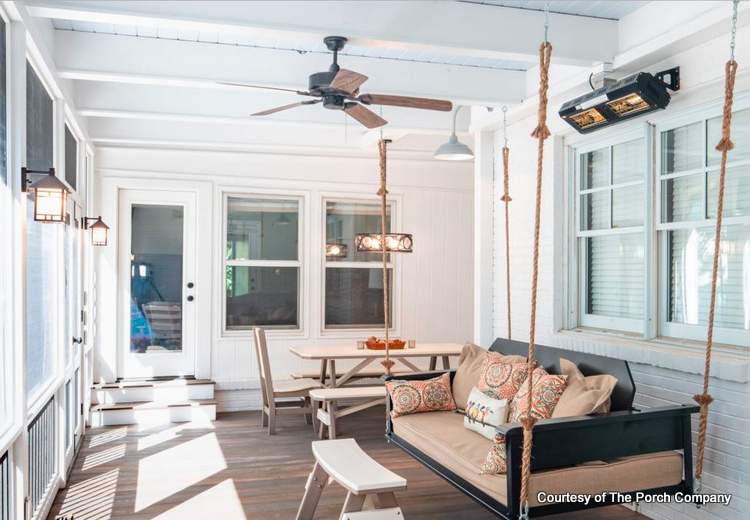
Small Porch Heating (<150 sq ft)
Compact screened spaces need targeted heating:
– Electric space heaters provide plug-and-play simplicity
– Tabletop propane units deliver focused heat for 2-4 people
– Wall-mounted infrared systems save valuable floor space
For small porches, position your heater to create a “heat pocket” around seating areas rather than trying to warm the entire space.
Medium Porch Solutions (150-300 sq ft)
Larger screened areas benefit from increased heat output:
– Freestanding propane heaters deliver maximum BTU output
– Multiple electric heaters create zone heating flexibility
– Gas fireplaces serve as permanent heating centerpieces
Medium porches often require two heat sources positioned to cover different seating zones—avoid trying to heat the entire space with a single unit.
Large Porch Options (>300 sq ft)
Expansive screened areas demand professional-grade solutions:
– Natural gas heaters provide continuous operation without tank refills
– Multiple infrared systems ensure even heat distribution
– Under-floor heating offers luxury comfort with invisible installation
Large screened porches typically require professional assessment to determine the optimal heating configuration.
Heat Retention Upgrades That Actually Work
Wind Barrier Solutions
Clear vinyl panels outperform fabric alternatives:
– Install roll-down systems over existing screens
– Block wind while maintaining visibility
– More effective than curtains at retaining heat
– Easily removable for seasonal storage
Weather-resistant curtains provide budget-friendly options:
– Retractable during warmer months
– Less effective than vinyl but more economical
– Choose heavy-duty materials for better insulation
Structural Improvements for Permanent Comfort
Insulation retrofits reduce heating costs:
– Floor insulation installation under existing decking
– Wall and ceiling insulation for permanent comfort
– Professional assessment determines cost-effectiveness
– Significant long-term energy savings
Adding insulation transforms your screened porch from a seasonal space to a true four-season room with proper heating.
Professional Installation Requirements
When to Call Professionals Immediately
Mandatory professional services include:
– Natural gas line connections
– Fireplace or fire pit installations
– Under-floor heating system setup
– Structural modifications for mounting
– Ventilation system evaluation
Don’t risk DIY installations with gas connections—licensed professionals prevent deadly carbon monoxide leaks.
Professional Assessment Criteria
Qualified technicians evaluate:
– Exact porch dimensions and ceiling height
– Local building code compliance requirements
– Fuel source availability and connection feasibility
– Safety system integration needs
– Long-term maintenance accessibility
A professional assessment costs less than potential property damage from improper installation.
Maintenance & Seasonal Care Checklist
Pre-Season Preparation Steps
Complete this checklist before first use:
– Clean heater surfaces and components thoroughly
– Inspect for damage or corrosion
– Test safety shut-off mechanisms
– Verify fuel connections and lines
– Check propane tank condition
Neglecting pre-season maintenance reduces efficiency and creates safety risks.
Safety Shutdown Procedures
Always follow these steps after use:
1. Turn off heater at control valve
2. Allow complete cooling (30-60 minutes)
3. Cover only after cool to touch
4. Store propane tanks upright in ventilated area
Never cover a warm heater—this creates fire hazards from trapped heat.
Final Safety Reminders for Year-Round Enjoyment
Your screened porch can become a comfortable retreat any time of year with proper heater selection and installation. Remember that safety clearances, ventilation requirements, and fuel type selection aren’t suggestions—they’re essential for protecting your family and property.
Measure your space carefully, review local building codes, and never skip professional installation for gas connections. The right heater transforms your screened porch into the favorite room in your house, even when temperatures drop outside. With proper precautions, you can safely enjoy crisp evenings on your porch all season long—without compromising safety for comfort.
