
How to Fix Gas Grill No Gas Flow Issue
This post contains affiliate links. As an Amazon Associate, we earn from qualifying purchases.
You’ve marinated the steaks, prepped the veggies, and gathered the family for a long-awaited cookout—only to face the grilling nightmare: your gas grill has no gas flow. No ignition, no flame, just silence where sizzling should be. This frustrating scenario affects over 60% of propane grill owners annually, but here’s the good news: 9 out of 10 gas flow failures stem from simple, fixable issues you can resolve in under 30 minutes with basic tools. Most problems aren’t broken components but preventable blockages or safety mechanisms triggered by common oversights.
When your gas grill has no gas flow, resist the urge to call a repair technician immediately. The culprit is likely one of seven systematic issues—from an empty tank to a spider web clogging your burner. This guide cuts through confusing online advice to deliver field-tested solutions verified by grill manufacturers. You’ll learn precise diagnostic steps, safety-critical warnings, and pro techniques to restore full flame without damaging your equipment. By the end, you’ll confidently troubleshoot any gas flow failure and prevent repeat occurrences.
Confirm Your Propane Tank Isn’t Empty
Don’t waste time dismantling your grill when the solution might be as simple as swapping tanks. Many owners mistake low fuel for mechanical failure after seeing misleading gauge readings.
Weigh Your Tank for Accurate Fuel Check
Full 20-lb tank: 37-38 lbs total weight
Empty tank: Approximately 18 lbs
Critical threshold: Below 25 lbs means insufficient fuel for long cooks
Place your tank on a bathroom scale. Subtract the tare weight (marked as “TW” on the tank collar—usually 17-18 lbs). If the net propane weight is under 15 lbs, swap the tank immediately. Gauges often stick due to moisture, making weight verification the only reliable method.
Cross-Test with Another Gas Device
Disconnect your tank and attach it to a camping stove or neighbor’s grill. If gas flows there but not your grill, the tank isn’t the issue. This 30-second test eliminates false diagnoses. Pro tip: Always open the tank valve slowly—rushing triggers the regulator’s safety lock.
Reset Your Regulator’s Bypass Mode
Your regulator’s safety system likely froze gas flow after detecting a “leak” (often just a normal pressure surge). This bypass mode reduces flow to 10%, mimicking complete failure.
Standard Bypass Reset Procedure
- Open grill lid fully (never reset with lid closed)
- Turn off tank valve and disconnect regulator
- Set all burner knobs to HIGH (including side burners)
- Wait exactly 60 seconds for residual gas to clear
- Turn all knobs OFF
- Reconnect regulator
- Open tank valve SLOWLY (2+ seconds from closed to open)
- Light normally
Why speed matters: Opening the tank valve too quickly creates a pressure spike that re-triggers bypass mode. Move the valve like you’re pouring syrup.
Emergency Reset for Stubborn Lockouts
When standard reset fails:
– Turn tank and all knobs OFF
– Remove regulator coupling nut (counterclockwise)
– Open lid, turn knobs to HIGH for 5-10 minutes
– Turn knobs OFF, reattach nut
– Open tank valve slowly
Warning: If bubbles appear during soap testing after reset, skip to leak detection—you have an actual leak.
Pinpoint and Seal Gas Leaks
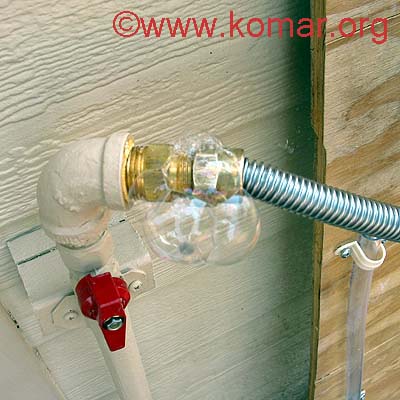
Leaks cause both flow failure and dangerous gas accumulation. A soap test identifies issues in minutes with household items.
Soap Solution Leak Detection
Mix equal parts dish soap and water in a spray bottle. With gas ON:
– Spray tank-to-regulator connection
– Spray regulator-to-hose junction
– Spray hose-to-manifold point
– Spray all valve connections
Interpret bubbles: Large, rapid bubbles mean serious leaks requiring immediate shutdown. Small bubbles may indicate minor seepage—monitor closely but continue testing.
Fix Connection Leaks Safely
For leaky fittings:
1. Turn off tank valve immediately
2. Disconnect and reconnect the hose
3. Retest with soap solution
4. Tighten connections hand-tight plus ¼ turn max
Never overtighten—this strips fittings and worsens leaks. Replace any hose showing cracks, kinks, or bubbling during testing. Hoses cost under $20 and are single-use safety components.
Clear Burner Blockages Causing Flow Failure
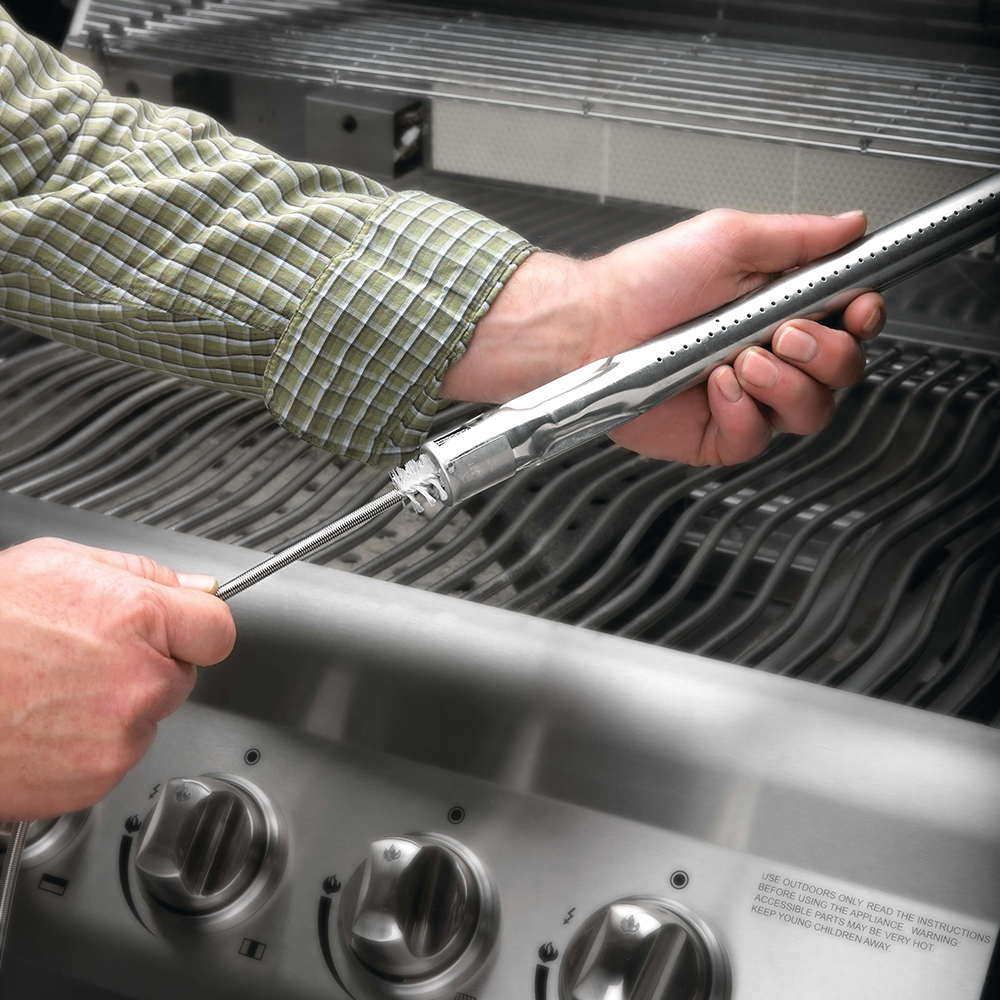
Food debris, spider nests, and rust in burner tubes mimic gas supply issues. Springtime startups often reveal overwintering spider webs blocking venturis.
Venturi Tube Cleaning Method
Tools: Bottle brush or venturi-specific brush
– Remove burners from grill
– Insert brush into venturi tubes (metal tubes connecting burners to valves)
– Scrub vigorously to dislodge webs and debris
– Critical visual cue: Look for gray spider silk residue near tube openings
Pro tip: Store grills with burner tubes covered by plastic bags to prevent spider intrusion.
Burner Port Unclogging Process
Tools: Wire brush or straightened coat hanger
– Remove grates and heat tents
– Inspect burner ports (small holes along burner tubes)
– Brush ports thoroughly
– For stubborn clogs, gently insert coat hanger wire
– Test result: Uneven flames or single-burner failure means specific port blockages
Warning: Never use high-pressure air—this forces debris deeper into tubes.
Verify Burner and Igniter Alignment
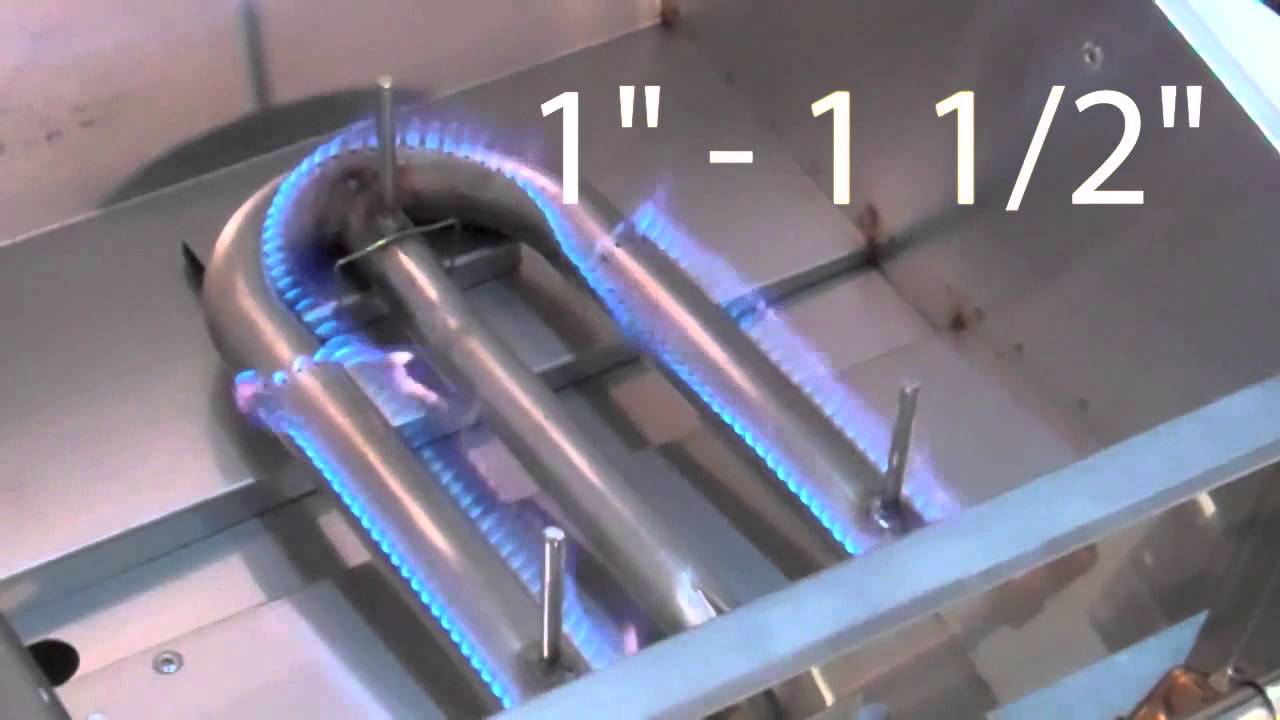
Misaligned burners prevent gas from reaching ignition points even with perfect flow.
Burner Seating Check
- Visual test: Burner tubes must sit directly over gas valve openings
- Physical test: Push each burner toward valves—you should hear a soft “click”
- Failure sign: Middle burner lights while others stay dead
Fix: Lift burner slightly and reseat firmly. Never force misaligned burners.
Igniter Gap Adjustment
The electrode must be ⅛ to ¼ inch from the burner tube.
– Too far: No spark reaches gas
– Too close: Electrode burns out on contact
Quick fix: Bend the electrode bracket gently with pliers until gap matches a dime’s thickness.
Replace Faulty Regulators After Testing
If bypass resets fail repeatedly, your regulator may be failing—especially if over 5 years old.
Regulator Failure Signs
- Max temperature stuck at 250-300°F
- Burners won’t light despite full tank
- Flow inconsistency after resets
- Visible corrosion on fittings
Testing sequence:
1. Disconnect regulator
2. Inspect for cracks/damage
3. Reconnect and soap-test connections
4. Briefly open burners, then close
5. Slowly open tank valve for final test
Replacement rule: After three failed resets, replace the regulator. New units cost $25-$40 and solve 90% of persistent flow issues.
Address Manifold Valve Failures
When individual burners won’t ignite despite clean ports, valve problems require targeted fixes.
Valve Function Testing
- Open each burner valve separately
- Listen: A soft “hiss” confirms gas flow
- Feel: Sticky resistance means valve failure
- Test result: If one valve works but others don’t, replace faulty valves
Replacement note: Some grills require full manifold replacement if individual valves aren’t sold separately.
Emergency Safety Protocol for Gas Leaks
If you smell gas or see large soap bubbles:
1. Turn off tank valve immediately
2. Evacuate area—no sparks or flames
3. Open all lids for ventilation
4. Call a gas technician before reuse
Never use lighters or phones near leaks—static electricity can ignite gas.
Prevent Future Gas Flow Failures
Monthly: Inspect hoses for cracks, check connection tightness (hand-tight only)
Quarterly: Clean burners/venturis, perform full soap leak test
Annually: Replace regulator (5-year lifespan), schedule professional inspection
Pro prevention: Always open tank valves slowly, store grill covered with burner tubes bagged, and disconnect tanks during long storage.
Final Note: When your gas grill has no gas flow, 80% of cases resolve by checking tank weight, resetting bypass mode, and cleaning burner ports. Start simple, follow this sequence, and you’ll avoid unnecessary service calls. Remember: If gas smell persists after tank shutdown, evacuate and call professionals immediately—safety always trumps dinner plans. With these steps mastered, you’ll spend less time troubleshooting and more time creating backyard memories.
