
How a Meat Smoker Works: Simple Guide
This post contains affiliate links. As an Amazon Associate, we earn from qualifying purchases.
Picture this: you’ve just spent $200 on a beautiful brisket, fired up your new smoker, and six hours later you’re staring at a dry, bitter piece of meat that tastes like an ashtray. Sound familiar? You’re not alone. Most BBQ disasters happen because people don’t understand exactly how a meat smoker works. To fix this, you need to master the science behind smoke and heat transfer. Whether you’re battling temperature swings, bitter smoke, or meat that refuses to get tender, this guide breaks down the complete process so you can cook competition-quality BBQ consistently. You’ll discover why your smoker behaves the way it does—and how to control it like a pitmaster.
The magic happens through three interconnected systems working in harmony: heat generation, smoke creation, and precise temperature control. Every successful smoke relies on understanding how these elements interact with your meat’s biology. When done right, connective tissues melt into gelatin while smoke compounds penetrate the surface, creating that signature bark and flavor. Get it wrong, and you’ll battle creosote buildup or uneven cooking. This isn’t guesswork—it’s applied physics and chemistry. By the end of this guide, you’ll troubleshoot problems before they ruin your cook and leverage your smoker’s design for perfect results every time.
Heat Flow and Smoke Circulation Mechanics
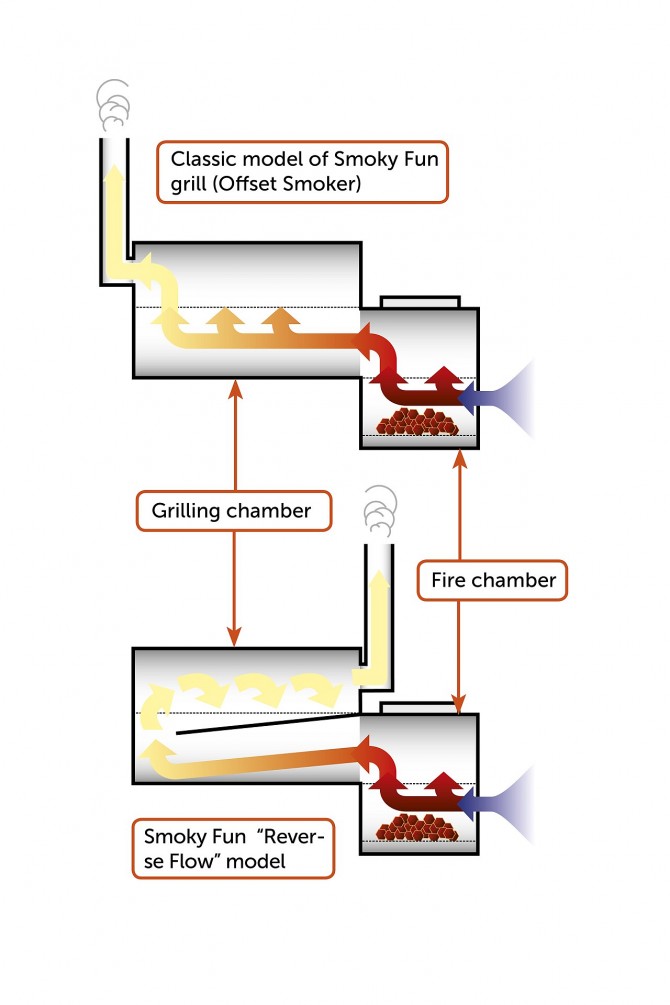
Your smoker’s performance lives or dies by how heat and smoke move through the cooking chamber. All designs rely on the same principle: hot air rises, pulling fresh oxygen into the firebox while pushing smoke over your meat. In offset smokers, heat travels horizontally from the firebox through the cooking chamber. The critical detail? Stack placement opposite the firebox creates natural convection currents. If your stack diameter is too narrow, smoke stagnates and turns bitter; too wide, and heat escapes too quickly. Aim for a stack height 1.5x your chamber height—this creates the “draw” needed for clean combustion.
Kamado-style ceramic smokers operate differently, using radiant heat from the thick ceramic walls combined with convective flow from the fire below. The ceramic absorbs and re-radiates heat so efficiently that temperature fluctuations stay under 10°F once stabilized. This makes them ideal for beginners struggling with consistency. Pellet smokers take a technological approach: an induction fan forces air through the burn box at 400-800 RPM, creating artificial wind that maintains circulation regardless of weather. Watch for thin blue smoke—it’s your visual indicator that heat and airflow are balanced perfectly.
Why Smoke Path Matters for Flavor Penetration
The route smoke takes directly impacts flavor development. Short, direct paths (like in vertical water smokers) work best for poultry and fish since smoke has less distance to travel before contacting meat. Long, winding paths (offset smokers) allow more time for combustion byproducts to break down, creating cleaner smoke ideal for 12-hour brisket cooks. Here’s what to watch for: if smoke pools in one area of your chamber, rotate meat every 90 minutes. Uneven smoke exposure causes bitter spots alongside under-flavored sections. Always position fattier cuts toward heat sources—rendered fat carries smoke compounds deeper into the meat.
Temperature Control Systems Decoded
Manual Vent Management for Charcoal Smokers
Your dampers are precision instruments, not just holes in metal. Bottom vents control oxygen supply to the fire—open wider for more heat. Top vents manage exhaust flow, but here’s the counterintuitive part: closing the top vent increases temperature by trapping heat inside. Start with both vents fully open when lighting. Once you hit 200°F, close the bottom vent 25% to stabilize. Then fine-tune with the top vent: open 10% to raise temperature 15°F, close 10% to drop it. Never close both vents completely—this starves the fire of oxygen, creating dangerous creosote buildup that ruins flavor.
For offset smokers, maintain a fire barely visible through the cooking chamber. Oversized flames create temperature spikes that dry out meat. Add pre-lit charcoal every 45 minutes through the firebox door—never open the cooking chamber during long cooks. A water pan placed between firebox and meat diffuses heat and adds crucial humidity, preventing the evaporative cooling that causes “stalls” at 150-170°F.
Automated Systems in Pellet Smokers
Pellet smokers use PID controllers that check chamber temperature every 10-15 seconds, making micro-adjustments to auger speed. At 225°F, the auger delivers 6-8 pellets every 30 seconds; in freezing weather, this jumps to 12 pellets per cycle. This explains why winter cooks consume 30% more fuel. Prime new smokers by running empty at 350°F for 30 minutes to burn off manufacturing oils—that “plastic” taste in first cooks comes from unburned residues. Always start at 180°F for 15 minutes before ramping up; this prevents the 50°F overshoot common with cold controllers.
Smoke Chemistry and Flavor Secrets
Wood Combustion Science for Clean Smoke
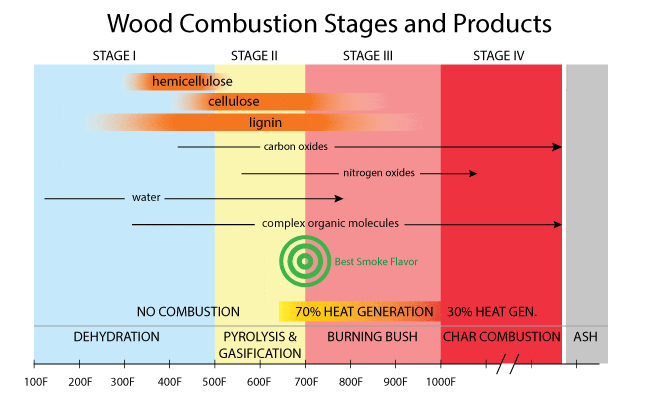
When wood burns between 650-750°F, it undergoes pyrolysis—thermal decomposition that releases flavor compounds. Syringol creates that classic smoky aroma, guaiacol adds spicy depth, and phenol provides subtle sweetness. But visible smoke isn’t flavoring your meat—it’s the invisible vaporized compounds in thin blue smoke that adhere to the meat’s surface. Thick white smoke means incomplete combustion, depositing bitter creosote. Achieve clean smoke by:
– Using only dry, seasoned wood (moisture below 20%)
– Maintaining adequate airflow (dampers 50-75% open)
– Keeping firebox temperatures above 600°F
Pro tip: Add wood chunks only when coals are fully ashed over—adding to cold coals creates acrid smoke.
Smoke Ring Formation Demystified
That prized pink ring isn’t smoke penetration—it’s a chemical reaction between nitrogen dioxide (from combustion) and myoglobin in meat. This only happens below 140°F, which is why starting with cold meat is critical. Moisture accelerates the reaction, so spritzing with apple juice every hour for the first 3-4 hours deepens the ring. The ring typically extends 1/8-3/8 inch inward and stops growing once meat hits 140°F. Don’t chase a thicker ring—it won’t improve flavor and indicates over-smoking.
Troubleshooting Temperature Issues
Diagnosing Heat Problems in Real Time
Sudden temperature drops: Check for ash buildup blocking airflow. Charcoal produces 1/2 cup ash per pound burned—enough to smother airflow in 4 hours. Clean ash from firebox every 2 hours during long cooks using a dedicated ash tool.
Runaway heat spikes: Grease fires cause 80% of sudden surges. A single tablespoon of rendered fat hitting hot coals can spike temperatures 50°F in minutes. Always use drip pans under fatty cuts like brisket.
Uneven heating: Offset smokers develop 25-40°F gradients from firebox to stack. Combat this by rotating meat 180 degrees every 2 hours or placing a water pan to diffuse heat.
Weather Compensation Tactics
Wind steals heat through convection. Position smokers perpendicular to prevailing winds, using natural barriers like walls when possible. In cold weather (<40°F), increase fuel loading by 25% for pellet smokers or 40% for charcoal. Always pre-heat 15 minutes longer in freezing conditions—the metal frame acts as a heat sink. During rain, cover the smoker’s top vent with a foil chimney cap to prevent water intrusion while maintaining draw.
Equipment-Specific Optimization
Offset Smoker Mastery Protocol
Start fires small—3-4 split logs the size of your forearm. Oversized fires create bitter smoke and temperature spikes. Add wood every 45-60 minutes through the firebox door, not when temperature drops. This prevents the 50°F swings that ruin texture. Maintain ideal temperature (225-275°F) measured 6 inches from the meat—not at the dome. Use the “hand test”: you should hold your hand over the grate for 3-4 seconds before pulling away. If you can’t, close dampers 10%.
Pellet Grill Performance Hacks
Empty the burn pot every 20 hours of operation—ash buildup reduces airflow and causes temperature swings. Most “malfunction” errors trace back to clogged burn pots. After each cook, run the smoker at 350°F for 10 minutes to burn off residue before shutting down. Store pellets in airtight containers with desiccant packs; humidity above 60% causes swelling and auger jams. Always use premium pellets with 6-8% moisture content—cheap pellets contain up to 15% moisture, reducing heat output by 20%.
Maintenance for Reliable Performance
Deep Clean Schedule
Creosote buildup reduces heat transfer and creates bitter flavors. Clean chimney pipes monthly during heavy use with a stiff brush—creosote is flammable and causes 25% of smoker fires. Replace gaskets annually; a $15 kit improves temperature stability by 50%. Test door seals with the dollar bill trick: close the lid on a bill—if it slides out easily, replace seals immediately.
Calibration Protocol
Test thermometer accuracy monthly using boiling water (212°F at sea level). Replace probes annually—even quality units drift 10-15°F over time. Always trust grate-level readings over dome thermometers, which can read 25-50°F high due to radiant heat. For critical cooks, use a wireless dual-probe thermometer: one in the chamber near meat, one in the meat itself.
Master these fundamentals, and you’ll transform from frustrated beginner to confident pitmaster. The science never changes—only your understanding of it. Start with chicken thighs to dial in your process, then graduate to longer cooks as your skills develop. Remember: great BBQ comes from managing heat, smoke, and time—not from secret rubs or expensive equipment. Now that you know exactly how a meat smoker works, your next cook will be the best one yet.
