
How Gas Grill Igniters Work: Simple Explanation
This post contains affiliate links. As an Amazon Associate, we earn from qualifying purchases.
You turn the knob, press the igniter button, and expect the satisfying whoosh of flame—but silence greets you instead. This frustrating moment happens to every griller, yet understanding how gas grill igniters work transforms panic into precision fixes. Most modern grills use one of two systems: the rugged piezo-electric clicker or the battery-powered spark generator. Both create the same critical result—a tiny lightning bolt to ignite gas—but through wildly different physics. Knowing how gas grill igniters work reveals why they fail and how to revive them in minutes, avoiding costly repairs and getting you back to cooking.
How gas grill igniters work hinges on converting mechanical force or battery power into 5,000–20,000 volts of electricity. This voltage bridges a microscopic gap near your burner, creating a plasma arc that lights the gas stream. Without this spark, unburned propane accumulates, creating fire hazards and ruining dinner plans. In this guide, you’ll learn exactly what happens inside that igniter button, diagnose failures like a pro, and implement maintenance that prevents 80% of ignition failures.
Piezo-Electric Ignition Mechanics
Crystal Creates Lightning from Pressure
Pressing your grill’s piezo igniter button isn’t just pushing plastic—it’s harnessing physics older than the transistor. Inside, a spring-loaded hammer cocks back as you press down. At the button’s full travel point, the hammer slams into a quartz or ceramic crystal with surgical precision. This impact deforms the crystal in microseconds, triggering piezoelectricity: a phenomenon where mechanical stress generates massive voltage (5,000–20,000 volts). That surge races through a rigid conductor to an electrode positioned 1–3 millimeters from your burner. When the voltage exceeds air’s dielectric strength (≈33 kV/cm), it ionizes the gap, creating a visible plasma arc—the spark that lights your gas.
What That Click Really Means
That distinctive click contains two critical sounds: the mechanical snap of the hammer hitting the crystal and the sharp crack of the electrical arc itself. A loud, crisp double-click signals a healthy system. If it sounds muffled or weak, the hammer spring is fatiguing—reducing impact force and voltage output. This is why older piezo igniters sometimes require multiple presses: the worn spring can’t generate enough voltage to jump the electrode gap reliably.
Built to Last the Distance
Piezo systems dominate budget and commercial grills for good reason. With no batteries to corrode and only one moving part (the hammer), they withstand rain, snow, and temperature extremes. Most deliver 10,000–20,000 sparks before spring fatigue sets in. Unlike electronic igniters, they fire instantly in freezing weather since they don’t rely on battery chemistry. This durability makes them ideal for harsh climates but frustrating when lighting stubborn burners—their single-shot spark offers no second chances.
Battery-Powered Electronic Ignition
From 1.5 Volts to 15,000 Volts
Battery igniters perform electronic alchemy: transforming 1.5 volts from an AA or AAA cell into 5,000–15,000 volts. When you press the button, you complete a circuit that powers an oscillator. This oscillator drives a miniature transformer or solid-state inverter, which rapidly multiplies the voltage into high-frequency pulses. The result? Either a single spark (like piezo) or a continuous stream of 3–10 sparks per second if you hold the button down. This rapid-fire capability is why battery systems excel at lighting damp or misaligned burners—you get repeated ignition attempts until gas catches.
Battery Life Reality Check
Don’t assume your igniter died when it’s actually a dead battery. Alkaline cells typically power 100–300 grill starts before failing, but cold weather and humidity accelerate drain. If your igniter worked perfectly in May but sputters by August, replace the battery first—it’s the culprit 70% of the time. Pro tip: Remove batteries during winter storage. Even when idle, electronic circuits draw slight current, causing corrosion that destroys the entire module. Store spares in a cool, dry place—not inside the grill cabinet where heat degrades them.
Component Breakdown: What You’re Actually Fixing
Electrode Positioning
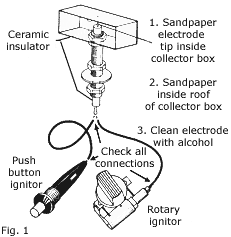
Both systems rely on identical stainless steel electrodes positioned 1–3 millimeters from burner ports. This gap is non-negotiable: too narrow (<1mm), and the spark shorts against metal; too wide (>3mm), and voltage can’t bridge the gap. After heavy use, burner vibration often shifts electrodes out of alignment—a silent killer of ignition. Always verify this gap with a non-conductive spacer (like a folded business card) during troubleshooting.
Wire Routing Matters
Piezo systems use short, rigid conductors that rarely fail. Battery systems route thin high-voltage wires through protective looms, but these are vulnerable. Heat exposure near burners cracks insulation, while rodents chew through looms stored in garages. A single break in this wire kills the spark even with fresh batteries. During maintenance, trace the entire wire path from module to electrode, checking for melted spots or rodent damage.
Switch Variations
Piezo igniters use a mechanical push rod that physically moves the hammer—simple but prone to grease clogging. Battery systems rely on tactile buttons or membrane switches that complete electronic circuits. These fail silently when moisture corrodes contacts or grease infiltrates the switch mechanism. If pressing the button feels “mushy” or unresponsive, disassemble and clean it with isopropyl alcohol.
Quick Diagnostic Steps
No Spark Troubleshooting
Start with electrode cleaning: brush the tip with a soft brass brush to remove carbon buildup (the #1 cause of failure). Next, verify the 1–3mm gap using a business card as a spacer. For piezo systems, listen for the hammer click—no sound means a disconnected or seized mechanism. For battery units, swap in a fresh cell first. If sparks still won’t fly, inspect the high-voltage wire for breaks and check battery terminals for white corrosion (clean with alcohol and a cotton swab).
Intermittent Spark Issues
Sporadic sparks usually indicate low battery power (in electronic systems) or a weakening hammer spring (in piezo). But don’t overlook burner alignment: if flames lift the burner slightly during ignition, it widens the electrode gap mid-spark. Hold a flashlight near the burner while pressing the igniter—you’ll see if the gap changes. Critical fix: Tighten burner mounting screws to prevent movement.
Gas Flow Problems
Remember: sparks need gas to ignite. If you hear clicking but get no flame, turn off the gas, wait five minutes, then retry. Check propane tank levels and regulator connections. If multiple burners won’t light, detach them and clear spider webs from orifices with a thin wire—a common issue mistaken for igniter failure.
Cleaning and Maintenance Protocol
Monthly Quick Clean
While your grill cools after cooking (warm but not hot), brush the electrode tip with a brass or nylon brush. This 30-second habit prevents carbon buildup responsible for 80% of ignition failures. Never use steel wool—it erodes the stainless electrode.
Seasonal Deep Clean
Every few months, remove burners and run a wire through each orifice to clear food debris. With burners out, adjust the electrode gap using a non-conductive feeler gauge. Reinstall burners and verify flame consistency across all ports—uneven flames indicate blockages.
Moisture Management
Wipe the igniter housing dry after each cook, especially for battery systems. Store your grill under a waterproof cover, but never seal it completely—trapped moisture causes corrosion. For winter, remove batteries and place them in a sealed bag indoors.
Replacement Guidelines
When to Replace the Entire Module
Replace your igniter if:
– No spark after cleaning and battery replacement (if applicable)
– Visible cracks in the ceramic electrode insulator
– Electrode tip eroded to less than half its original diameter
– Hammer spring is visibly fatigued (piezo) or inverter circuit failed (battery)
Never attempt field repairs on piezo hammer springs—they’re not user-serviceable.
Model-Specific Parts
Generic igniters often fit physically but fail electrically. Always match replacement modules to your exact grill model using the manual or manufacturer’s website. Incorrect voltage outputs cause weak sparks or module burnout.
Installation Safety
Disconnect the gas supply before replacing. Route new wiring away from burner flames—melted wires cause mysterious failures. After installation, test the igniter 3–5 times to confirm reliable sparking before reassembling the grill.
Performance Comparison: Which System Wins?

Reliability Champion
Piezo igniters win for pure longevity. No batteries mean no corrosion issues, and they fire reliably in -20°F weather that freezes electronic systems. But their single-shot spark struggles with clogged burners or wind.
Convenience Factor
Battery systems offer effortless lighting with continuous sparks—just hold the button until flames appear. This is invaluable for older grills with slightly misaligned components or when grilling in gusty conditions.
Cost Considerations
Piezo units cost less upfront and require no ongoing maintenance. Battery systems have higher initial costs and annual battery expenses, but module replacements are simpler since they’re self-contained.
Safety Best Practices
Gas Safety Protocol
Never attempt ignition with the lid closed—accumulated gas can flash into a fireball. If you smell gas but get no ignition, turn off the supply, wait five full minutes, and ventilate the area before troubleshooting.
Replacement Part Standards
Use only manufacturer-approved parts to maintain safety certifications. Aftermarket igniters might work temporarily but can void warranties and create liability risks during accidents.
Storage Wisdom
Remove batteries during long-term storage. Store propane tanks upright in a well-ventilated area—not attached to the grill. Cover your grill with a breathable fabric cover to prevent moisture trapping.
Quick Reference Checklist:
– [ ] Monthly: Clean electrode tip with brass brush
– [ ] Every 6–12 months: Replace battery (electronic systems)
– [ ] Seasonal: Inspect wiring and verify 1–3mm electrode gap
– [ ] Storage: Remove batteries and cover grill properly
Understanding how gas grill igniters work turns ignition failures from dinner disasters into 5-minute fixes. Most problems stem from dirty electrodes, dead batteries, or misaligned components—issues you can resolve with basic tools and this guide. By implementing these maintenance habits, you’ll extend your grill’s lifespan by up to 40% while ensuring reliable, safe starts every time. Now that you know how gas grill igniters work, that silent button press will never ruin your barbecue again.
