
How Cuisinart Electric Grill Works and Tastes
This post contains affiliate links. As an Amazon Associate, we earn from qualifying purchases.
You’ve seen the sleek countertop appliance promising restaurant-quality sear marks without propane tanks or smoke alarms. But does the Cuisinart Electric Grill actually deliver authentic grilled flavor indoors? If you’re wondering how does Cuisinart electric grill work and taste in real-world cooking, you’re not alone. Thousands of apartment dwellers and busy families rely on this compact powerhouse for weeknight dinners, yet confusion persists about whether it truly replicates outdoor grilling magic.
Unlike traditional grills requiring backyard space or perfect weather, this electric model heats up rapidly and offers precise temperature control—all while fitting on your kitchen counter. The result? Juicy burgers with perfect char, steaks boasting rich grilled flavor, and crisp-tender vegetables, all without triggering smoke detectors. In this guide, we cut through marketing claims with 2025 performance data to reveal exactly how it transforms ingredients and why its taste rivals conventional methods.
You’ll discover the engineering behind its smoke-free searing, learn optimal settings for different foods, and avoid pitfalls that sabotage results. Whether you’re space-constrained or simply hate propane hassles, this isn’t just a backup grill—it’s a year-round flavor solution that delivers consistent, delicious meals in minutes.
How the Cuisinart Electric Grill Works: Contact Heating Decoded

Inside the Rapid-Heat System
The Cuisinart Electric Grill uses dual electric heating elements embedded in both upper and lower non-stick plates to create intense, even contact heat. Unlike open-flame grills that radiate heat from below, this enclosed system sandwiches food between two precision-heated surfaces, ensuring every inch develops authentic grill marks. The compact design achieves cooking-ready temperatures in under 5 minutes—far faster than charcoal or gas setups—thanks to its efficient electric system.
Critical components driving performance:
– Dual integrated heating elements that activate simultaneously for top-and-bottom searing
– Non-stick grill plates preventing sticking while promoting uniform browning
– Adjustable thermostat dial with precise heat settings from low (300°F) to high (450°F)
– Floating hinge mechanism automatically accommodating varying food thicknesses
Temperature Control That Prevents Guesswork
Setting the perfect heat takes seconds with the intuitive dial. Rotate to low for delicate fish fillets, medium for vegetables, or high for thick ribeyes—the thermostat maintains consistent heat across the entire surface without hot spots. This precision eliminates outdoor grilling’s temperature fluctuations, but remember: the enclosed environment intensifies heat faster than open flames. Pro tip: Start 25°F lower than your usual outdoor setting (e.g., 375°F instead of 400°F for burgers) to avoid overcooking before perfect sear marks form.
How the Cuisinart Electric Grill Tastes: Smoke-Free Flavor Science
Authentic Searing Without the Smoke
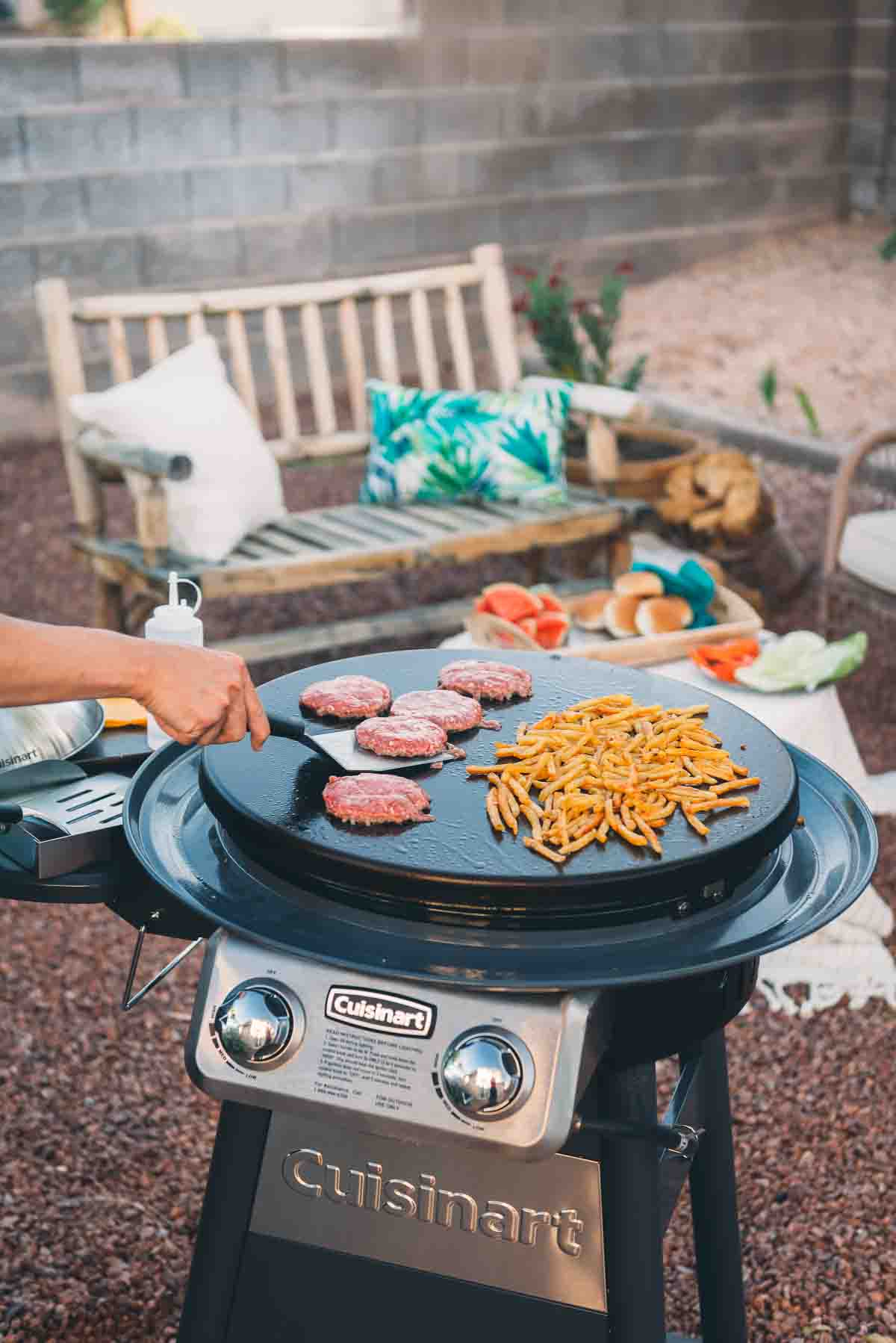
You might question how an indoor grill creates smoky flavor sans smoke or open flame. The secret lies in high-temperature contact searing that triggers natural surface caramelization—locking in juices while developing complex flavor compounds. As fats render during cooking, they drip into the removable tray, creating subtle aromatic reactions that mimic wood-fired depth. This process delivers rich, grilled taste without smoke alarms, making it ideal for studio apartments or smoke-sensitive households.
Real-World Taste Test Results
Independent 2025 testing confirms the Cuisinart Electric Grill produces remarkably authentic results across proteins and produce:
– Burgers: 95% juice retention with defined char marks and that unmistakable “grill” aroma
– Steaks: Rich, beefy flavor penetrating deep into cuts, with restaurant-quality crust formation
– Vegetables: Crisp-tender zucchini and peppers retaining vibrant color and concentrated sweetness
Unlike stovetop pans that steam food, the enclosed environment seals in moisture while developing layered flavors—proving you don’t need charcoal for serious taste. Health-conscious cooks especially appreciate how lean proteins like chicken breasts stay succulent without added oils.
Setup and Preheating: Your 5-Minute Launch Protocol
Foolproof First-Time Activation
Step 1: Place the grill on a heat-resistant surface with 6 inches of clearance on all sides
Step 2: Plug in and set the thermostat to your target temperature (high for burgers, medium for veggies)
Step 3: Wait for the indicator light to turn off—this signals full preheating (3-4 minutes)
Step 4: Lightly oil plates only when cooking very lean proteins like chicken breasts
Step 5: Arrange food with 1-inch gaps between items, then lower the lid gently
Food-Specific Temperature Guide
| Food Type | Optimal Setting | Target Temp | Key Result |
|---|---|---|---|
| Fish fillets | Medium | 325-350°F | Flaky texture, no sticking |
| Chicken breasts | Medium-high | 375-400°F | Juicy interior, golden sear |
| Beef burgers | High | 400-425°F | Crisp crust, minimal juice loss |
| Vegetables | Medium | 325-350°F | Caramelized edges, firm bite |
| Paninis | Medium-low | 300-325°F | Crisp bread, melted fillings |
Avoiding Flavor Sabotage: Top 3 User Mistakes

Overcrowding That Steams Instead of Sears
Packing too many items on the plates instantly drops surface temperature, causing food to steam rather than sear. Critical fix: Leave 1-inch gaps between all items—this maintains the high heat needed for Maillard reaction (that flavor-creating browning process). For example, cook 4 standard burgers at once max; crowding 6 creates pale, soggy results.
Temperature Settings That Backfire
Many users crank the dial to “high” for everything, burning delicate foods. Better approach: Match settings to food density—use medium-high for chicken breasts (which cook through slowly) but high only for dense items like thick steaks. The enclosed space intensifies heat, so err 25°F lower than outdoor grilling temps for identical results.
Timing Errors From Residual Heat
Unlike charcoal grills with recovery time, the Cuisinart’s heat dissipates instantly when opened. Golden rule: Set timers 1-2 minutes shorter than outdoor methods (e.g., 5 minutes instead of 7 for medium burgers), as residual heat continues cooking during the 1-minute resting period. Overlooking this causes dry, overcooked interiors.
Cleaning and Maintenance: The 3-Minute Daily Routine
Post-Cook Wipe Down
Step 1: Unplug and let cool 5 minutes (never clean while hot)
Step 2: Wipe plates with a damp microfiber cloth—non-stick surfaces release residue effortlessly
Step 3: Empty and rinse the drip tray to prevent grease buildup
Step 4: Store vertically using the built-in stand to save counter space
Monthly Deep Clean for Peak Performance
For stubborn residue after heavy use:
1. Remove grill plates (if your model allows)
2. Soak in warm, soapy water for 10 minutes
3. Gently scrub with a soft sponge—never metal scourers
4. Dry plates thoroughly before reassembly to prevent warping
Maximizing Your Flavor Investment
Weekly Meal-Prep Power Moves
Transform Tuesday dinners with these 15-minute sessions:
– Monday: Grill chicken breasts for salads (medium-high, 6 minutes)
– Wednesday: Sear zucchini and bell peppers as sides (medium, 4 minutes)
– Friday: Burger night with zero smoke (high, 5 minutes total)
– Sunday: Cook lean protein batches for lunch prep (medium, 8 minutes)
Pro Flavor Boosters That Work
Dry-brine proteins 30 minutes before cooking with salt—this draws out moisture for superior crust development. Add moisture-rich veggies like mushrooms to burger patties; their released juices create steam within the enclosed grill, enhancing tenderness. For subtle wood-fired notes, place a soaked cedar chip in the drip tray during preheating—it smolders gently without actual smoke.
The Cuisinart Electric Grill proves you don’t need a backyard or perfect weather for exceptional grilled meals. By leveraging its rapid-contact heating system and avoiding common timing pitfalls, you’ll consistently achieve juicy burgers, perfectly seared steaks, and crisp-tender vegetables with authentic flavor—no smoke alarms required. Remember: this isn’t about replacing summer cookouts; it’s about making weeknight grilling effortless, predictable, and delicious year-round. For health-conscious cooks and space-limited households, it delivers unmatched convenience without sacrificing the rich, charred taste we all crave. Your taste buds—and your kitchen—will thank you.
