
How Long Does a Patio Heater Propane Tank Last?
This post contains affiliate links. As an Amazon Associate, we earn from qualifying purchases.
You’ve set the perfect ambiance for your backyard gathering—twinkling lights, cozy seating, and the gentle hum of your patio heater. But as the sun dips below the horizon and guests start reaching for sweaters after three hours, a critical question hits you: how long does patio heater propane tank last before this warmth disappears? Whether you’re hosting a wedding reception or a casual Friday night dinner, guessing your propane supply turns cozy evenings into stressful scrambles for refills. Stop playing propane roulette. This guide cuts through the guesswork with precise runtime calculations, real-world variables that swing your tank life from 8 to 15 hours, and actionable strategies to stretch every drop of fuel. You’ll learn exactly when to swap tanks and how to avoid the dreaded mid-event chill.
9-10 Hour Baseline for Standard Patio Heaters
When your 40,000 BTU patio heater runs at full blast on a calm 70°F evening, a standard 20-pound propane tank delivers 9-10 hours of continuous heat. This isn’t a manufacturer estimate—it’s physics. A full 20-pound cylinder contains 430,000 BTUs of energy. Accounting for typical 90% heater efficiency, you get 387,000 usable BTUs. Divide that by your heater’s output:
BTU Math That Predicts Your Tank Life
- 40,000 BTU heater: 387,000 ÷ 40,000 = 9.7 hours
- 50,000 BTU commercial unit: 387,000 ÷ 50,000 = 7.7 hours
- 20,000 BTU tabletop model: 387,000 ÷ 20,000 = 19.4 hours
These calculations assume a clean burner and ideal conditions. But in reality, most users unknowingly operate at 75-80% capacity because they don’t crank the knob fully open. This simple oversight extends runtime by 20-30% without sacrificing comfort—meaning your “high setting” might actually be medium.
Why Your Tank Dies Early Despite the Math
If your 40,000 BTU heater kills a tank in 7 hours instead of 10, check these hidden culprits:
– Air in gas lines from infrequent use, wasting fuel during ignition attempts
– Carbon-clogged emitters reducing efficiency by 10-30%
– Yellow, sooty flames indicating incomplete combustion (a major runtime killer)
Always verify your flame is blue before timing runs—yellow flames signal inefficient burning that devours propane.
Wind, Weather, and Your Tank’s Secret Enemies

Your actual runtime can swing wildly from 8 to 15 hours based on five critical factors. Ignoring these turns theoretical calculations into meaningless guesses.
How Wind Steals 30% of Your Fuel
Gusty conditions don’t just feel colder—they force your heater to work harder. A mere 5 mph breeze can:
– Reduce perceived warmth by 50%, tempting you to crank the knob higher
– Increase fuel consumption by 10-15% even on “medium” settings
– Cause flame blowouts requiring repeated re-ignition (wasting 5-10% of propane)
Position heaters within 2 feet of walls or corners to create wind shadows. This simple move saves 5-15% of fuel by shielding the flame.
Temperature and Space Layout Pitfalls
The bigger the gap between patio temperature and your comfort zone, the faster propane vanishes. At 50°F ambient:
– Your heater burns 25% more fuel than at 65°F to maintain the same warmth
– Open patios lose heat 3× faster than semi-enclosed spaces, demanding higher settings
– Reflective surfaces (like light-colored walls) bounce radiant heat back, reducing runtime strain
Cluster seating within 6 feet of the heater instead of trying to warm the entire deck. This “zone heating” trick extends tank life by 20% without lowering thermostat settings.
Slash Costs With Smart Operation Tactics
Paying $15 for a tank refill only to burn it in 8 hours feels wasteful. But strategic usage cuts hourly costs from $1.88 to $0.75 while keeping guests warm.
The $1.50 Rule and How to Beat It
At standard high-setting runtime (9-10 hours per $15 refill), you’re spending $1.50/hour. But shift to medium setting after initial warm-up and:
– Runtime jumps to 12-15 hours ($1.00/hour)
– Intermittent use (lighting only during guest arrivals) stretches one tank across 3-4 evenings ($0.75/hour)
Commercial venues prove this works: Miguel’s rooftop bar uses windscreens to hit 9-10 hours per tank instead of 6-7, slashing weekly refill costs by 30%.
Three Maintenance Moves That Save Fuel
Skip these and you’ll waste 10-30% of propane:
1. Clean the emitter grid monthly with a wire brush to remove carbon buildup
2. Spray orange oil around gas lines to deter spider webs (a top cause of ignition failures)
3. Check thermocouple alignment—a dirty unit triggers shutdowns every 20 minutes, wasting fuel on re-ignition
A well-maintained heater delivers 5-10% better efficiency, turning a 9-hour tank into a 10-hour powerhouse.
Diagnose Runtime Killers in 60 Seconds

Before your next event, perform these visual checks to avoid premature tank death:
Tank Weight Test: The Ultimate Truth
- Full 20-lb tank: 37 pounds (17 lbs tare weight + 20 lbs propane)
- Empty tank: 17 pounds
Weigh it on a bathroom scale—if it’s under 30 pounds, you’re starting with a partial tank. Sarah, a weekend host, marks her tank weight with a Sharpie to track usage: “One tank lasts exactly four Sundays at 2.5 hours each.”
Flame Color = Fuel Efficiency Report Card
- ✅ Blue flame: Efficient burning (aim for this)
- ❌ Yellow tips or soot: Carbon buildup forcing higher BTU use
- ❌ Lifting off burner: Wind interference wasting fuel
If flames dance erratically, install the manufacturer’s windscreen immediately. It’s the single cheapest upgrade for extending runtime.
Safety Rules That Protect Your Tank Life
Ignoring these guidelines risks dangerous situations and prematurely drains propane:
Tank Storage That Prevents Pressure Loss
- Keep spare tanks ≥ 20 feet from operating heaters (fire code requirement)
- Store upright in cool, dry garages—never on concrete which accelerates rust
- Check certification dates: US tanks expire 12 years from manufacture; Canadian at 10 years
A rusty or dented tank won’t deliver full capacity. Inspect valves for cracks before connecting—leaks waste fuel and create hazards.
The Critical Pre-Use Checklist
- Soapy water test all connections for bubbles (indicates leaks)
- Ensure anti-tilt switch engages (prevents gas flow if knocked over)
- Confirm regulator is compatible with tank size (mismatched units cause freezing)
Never swap tanks while the heater runs. Close the valve first—ignition during swapping risks explosive gas buildup.
When to Consider Larger Tanks
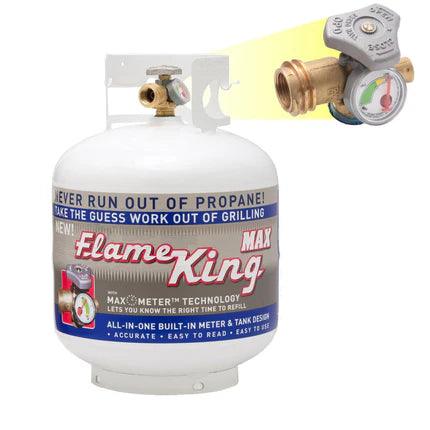
Standard 20-pound tanks work for most homeowners, but high-use scenarios demand upgrades:
30-Pound Tank: 60% More Runtime (With Caveats)
- Holds 30 lbs (7 gal) = 645,000 BTUs
- Delivers 16 hours at 40,000 BTU output
- Critical check: Verify heater compatibility—many consumer models max at 20 lbs
- Best for commercial patios hosting 50+ guests
A restaurant manager shared: “Two 20-lb tanks per heater per 8-hour shift was killing us. The 30-lb upgrade cut swap frequency by 40%.” But confirm your regulator supports higher flow rates first.
Why 40-Pound Tanks Rarely Work
Despite holding 430,000 BTUs more than standard tanks:
– Require external regulator upgrades ($50+)
– Exceed weight limits of most portable heater stands
– Primarily suited for permanent installations
Unless your patio heater specifies 40-lb compatibility, stick with 20 or 30-pound options.
Your Runtime Cheat Sheet for Real Conditions
| Scenario | Expected Hours | Cost Per Hour | Proven Fix |
|---|---|---|---|
| High setting, calm weather | 9-10 hours | $1.50 | Start on high, drop to medium after 15 mins |
| Windy conditions (10+ mph) | 6-8 hours | $1.88-$2.50 | Install manufacturer windscreen |
| Residential intermittent use | 3-4 evenings | $0.75-$1.00 | Cluster seating within 6 ft of heater |
| Dirty burner/emitter | 7-8 hours | $1.88 | Clean grid monthly with wire brush |
Bottom line: The answer to how long does patio heater propane tank last starts at 9-10 hours for standard 40,000 BTU units—but your actual runtime lives in the details. Track your tank weight, master medium settings, and shield the flame from wind to consistently hit 12+ hours. Always keep a spare tank on hand (stored safely 20+ feet away), and inspect for rust or dents before events. With these tactics, you’ll never face a cold patio again—just warm guests and stress-free hosting.
