
How to Stop a Grease Fire on Grill Safely
This post contains affiliate links. As an Amazon Associate, we earn from qualifying purchases.
You’re flipping burgers when sudden whoosh erupts beneath your grill grates—a grease fire ignites in seconds. Over 10,000 U.S. grill fires happen yearly, often escalating from minor flare-ups to home-threatening blazes within minutes. Knowing how to stop grease fire on grill correctly separates a quick recovery from a 911 emergency. This guide delivers battle-tested steps to extinguish flames safely, inspect damage, and prevent future disasters—all verified by fire safety protocols and NFPA data. No guesswork, just actionable tactics for your next cookout crisis.
Never Move a Burning Grill
Moving an active grease fire is the deadliest mistake homeowners make. Shifting the grill splashes flaming grease across decks, patios, or bystanders, turning a contained blaze into a multi-point fire. If flames lick the propane tank, control knobs, or fuel lines, evacuate immediately—propane combustion creates invisible pressure spikes that can rupture metal tanks into shrapnel. Smell gas beyond the fire zone? Back away and call 911 without hesitation. Your safety threshold is absolute: if the fire touches any fuel component, prioritize escape over intervention.
Why Relocation Spreads Danger
- Thermal shock risk: Sudden movement disrupts heat distribution, causing flare-ups to double in size.
- Grease trajectory: Even a slight tilt hurls burning droplets 10+ feet onto combustible surfaces.
- Trip hazards: Smoke impairs vision, increasing fall risks with heavy equipment.
Shut Off Gas Without Exposing Yourself

Only cut fuel if you can safely reach controls. Use a heat-resistant glove (leather or aramid fiber) to turn burner knobs off—but skip this if flames block the path. For propane models, rotate the tank valve clockwise until fully closed. This critical step requires precision: stay low to avoid radiant heat, use your protected hand, and never waste seconds if flames obscure the valve. Gas shutoff fails when homeowners rush; if you can’t complete it in 3 seconds, evacuate immediately.
Propane Valve Access Protocol
- Assess visibility: Only approach if flames stay below the tank collar.
- Use barrier protection: Shield hands with a folded towel if no glove is available.
- Turn decisively: Clockwise rotation stops gas flow—partial turns worsen leaks.
Smother Flames with Kitchen Essentials
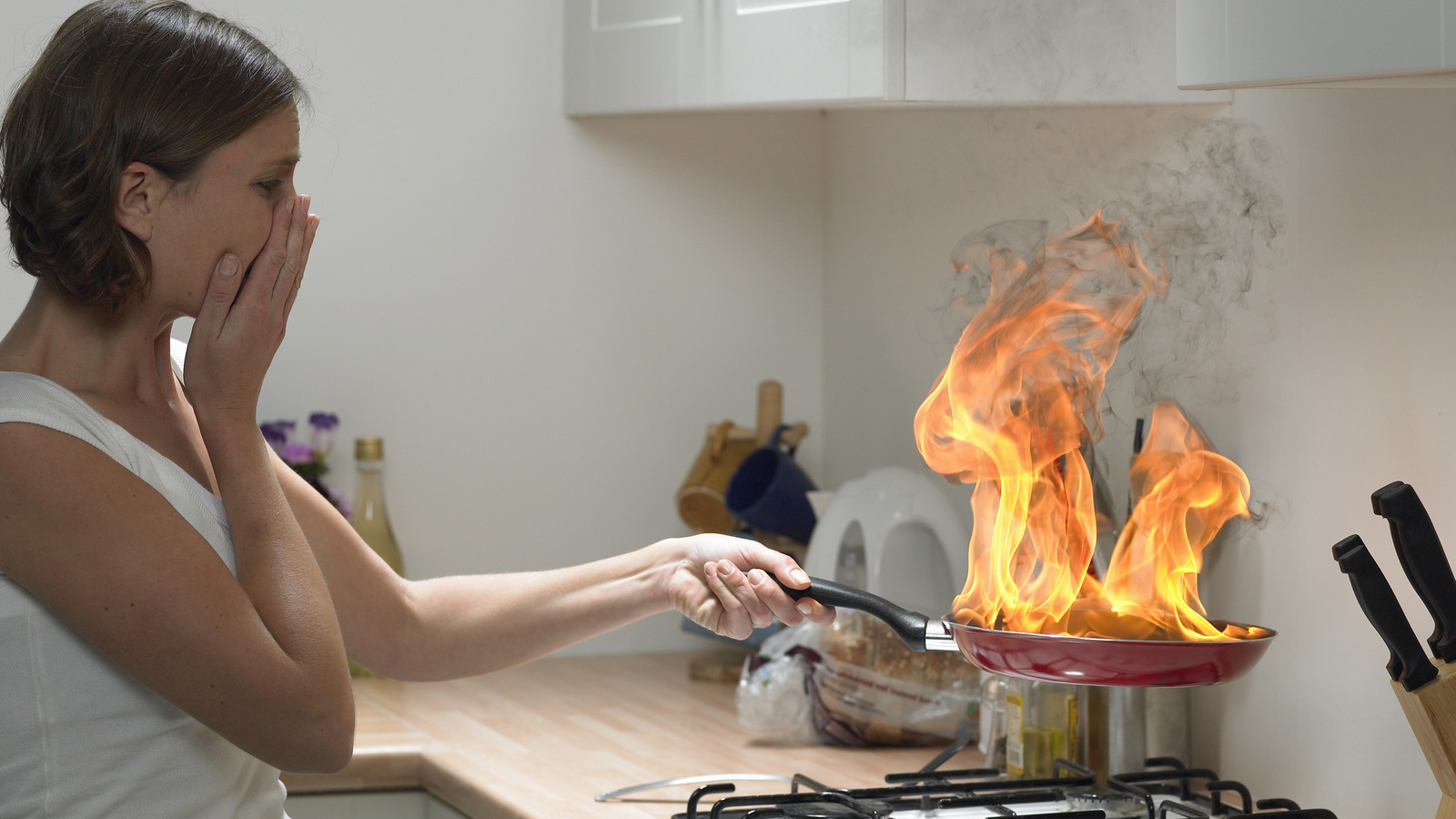
Closing the lid cuts oxygen but rarely suffocates gas grill fires due to large drain holes. Immediately dump baking soda or kosher salt onto flame bases—these release CO₂ without steam explosions. Keep a 2-pound labeled container within arm’s reach during every cookout. For small flare-ups, cover with a metal baking sheet (never glass or plastic, which shatter or melt). Crucially, never use water: one cup hitting grease creates 1,600 cups of scalding steam, launching fireballs across your patio.
Why Baking Soda Beats Salt
- Faster reaction: Soda decomposes at 158°F, releasing CO₂ instantly versus salt’s slower smothering.
- Grease penetration: Granules sink into burning oil, cutting combustion deeper than salt.
- Accessibility: Most kitchens stock soda, but keep a dedicated grill container (moisture ruins effectiveness).
Deploy ABC Fire Extinguisher Correctly
When smothering fails, grab your ABC-rated extinguisher (like First Alert PRO5) within 10 feet of the grill. Aim low at the fire’s base, sweep side-to-side in 3-second bursts, and maintain 6 feet distance. Never use Class K units—their wet chemicals react dangerously with propane. If flames persist after 15 seconds of spraying, evacuate immediately; lingering indicates hidden fuel sources or gas leaks. Aerosol extinguishers or fire blankets are unreliable for grease fires—invest in a proper 2.5-lb ABC model.
Targeting the Fire Triangle
- Fuel: Focus on grease pools under grates, not just visible flames.
- Oxygen: Sweep extinguisher side-to-side to displace air pockets.
- Heat: Cool metal surfaces after flames die to prevent re-ignition.
Emergency Evacuation Triggers
Call 911 from a safe location if flames contact the propane tank, spread beyond the grill body, or resist extinguishing within 15 seconds. Alert neighbors if embers threaten nearby structures—burning grills can ignite vinyl siding 20 feet away in under 5 minutes. Never re-enter the area until firefighters confirm safety; residual propane vapors linger long after flames vanish.
Critical Evacuation Timeline
| Time Since Ignition | Action Required |
|---|---|
| 0-10 seconds | Attempt smothering/fuel shutoff |
| 10-15 seconds | Deploy extinguisher |
| 15+ seconds | Evacuate and call 911 |
Post-Fire Damage Inspection
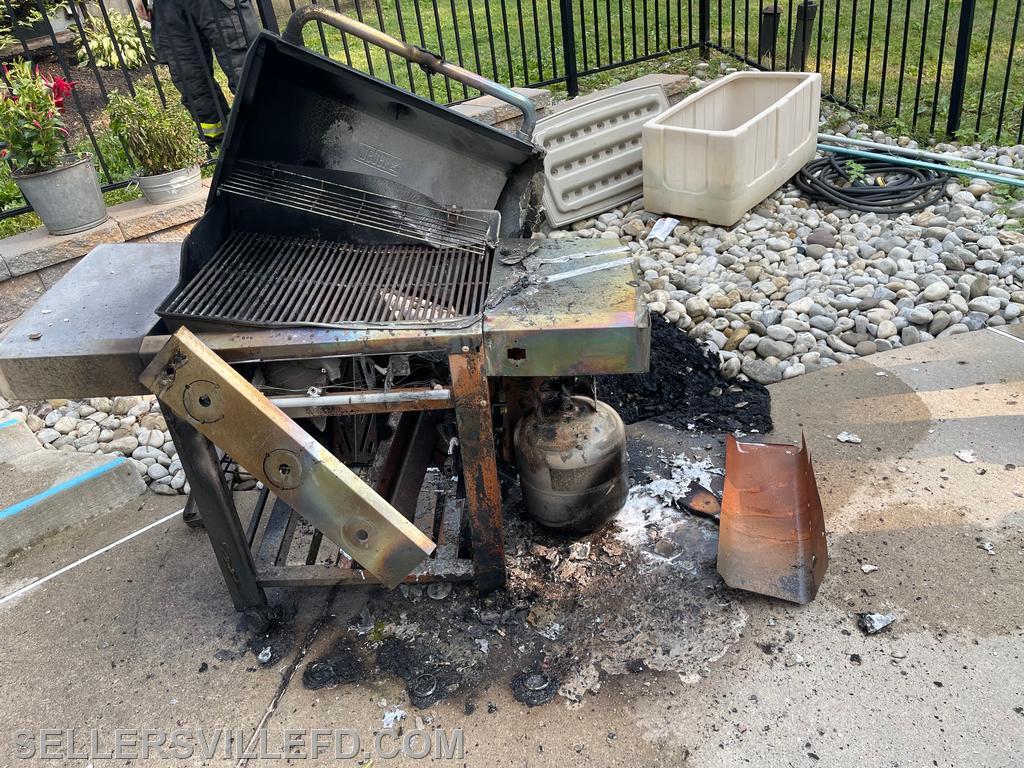
Wait 30-60 minutes before approaching—metal retains lethal heat. Test surfaces with the back of your hand; if you can’t hold it there for 5 seconds, wait longer. Inspect for:
– Melted hoses or soot-covered regulators (replace entire fuel system)
– Warped burner ports causing uneven flames
– Charred ignition wires risking electrical shorts
Any visible damage means do not reuse—compromised parts cause 30% of repeat fires.
Deep Clean to Prevent Re-Ignition
Remove all grease and soot with warm soapy water and a stiff brush. Pay special attention to burner ports—clogs create hot spots that ignite residual grease. Replace warped drip trays and flavorizer bars; bent metal redirects fat into flame zones. Finally, perform a leak test: mix equal dish soap/water, brush onto connections, then open gas. Zero bubbles confirms safety; any indicate immediate repair needs.
Cleaning Priority Checklist
- Scrape grates and interior walls
- Vacuum firebox floor debris
- Flush burners with warm water
- Replace drip tray liner
Trim Fats Before Grilling
Prevent 20% of all grill fires by trimming excess fat from meats—especially duck, brisket, or marbled steaks. Place fatty cuts over disposable drip pans to catch runoff without blocking vents. Never over-oil grates; a thin oil film suffices. When flare-ups occur, use long tongs to move food to a warming rack, then return pieces one-by-one for 30 seconds to burn off fat before finishing on cooler zones.
Monthly Gas System Maintenance
Test for leaks monthly: apply soapy water to hoses, regulators, and valves. Bubbles reveal pinhole leaks that silently fuel explosions. Clear burner ports with a paperclip to prevent spider-web clogs, and replace brittle hoses annually. NFPA data shows 40% of grill fires stem from neglected maintenance—this 5-minute check saves homes.
Essential Safety Gear Within Arm’s Reach
Mount an ABC extinguisher outside your grill (heat disables stored units). Keep baking soda in a large-mouth, labeled container—small shakers empty too fast for serious fires. Store heat-resistant gloves and long tongs nearby for safe food adjustments. Always have a charged cell phone pre-dialed to emergency services; seconds count when fires spread.
Key Takeaway: Grease fires demand immediate, precise action—close the lid, smother with baking soda, and evacuate if flames touch fuel lines. Prevention through post-cookout cleaning, fat trimming, and monthly gas checks keeps 95% of grill fires from ever starting. Your safest cookout begins with knowing how to stop grease fire on grill before the first burger hits the grate. Never gamble with propane; a 10-second response today prevents a lifetime of regret tomorrow.
