
How to Fix Pit Boss Smoker Not Turning On
This post contains affiliate links. As an Amazon Associate, we earn from qualifying purchases.
Your Pit Boss smoker sits cold and silent when it should be firing up for tonight’s ribs. No lights, no fan, no nothing—just dead silence. Before panic sets in, know this: most “dead” Pit Boss grills come back to life with simple 15-minute fixes. This guide walks you through exactly what to check, in the right order, with no tools beyond a screwdriver and basic multimeter. When your Pit Boss smoker won’t turn on, 90% of cases stem from power delivery failures—not catastrophic internal damage.
Don’t waste hours scouring forums for answers. We’ve compiled real-world diagnostics from Pit Boss owners who’ve resurrected Tailgaters, 1000-series, and Professional models using verified steps. Whether you’re facing complete darkness or cryptic “IT” error codes, you’ll discover precisely why your Pit Boss smoker won’t turn on and how to fix it before dinner tonight. The solutions are simpler than you think—often requiring nothing more than reseating a loose connection or swapping a $2 fuse.
Quick Power Diagnosis That Fixes 9 Out of 10 Dead Smokers

Start here before dismantling your grill—these three checks resolve most Pit Boss smoker won’t turn on scenarios in under five minutes. First, rule out your power source: Unplug your smoker and test the outlet with a phone charger or work light. Outdoor GFCI outlets frequently trip during rainstorms and won’t reset until manually triggered. If that outlet’s dead, move your smoker to a kitchen circuit or reset the tripped GFCI.
Next, inspect the inline fuse: Unplug your grill, then trace the power cord into the control box. That small glass tube (5×20mm, 8A) sacrifices itself during power surges. Remove it with needle-nose pliers and test continuity with your multimeter—healthy fuses read zero ohms. If open (no continuity), replace it with an identical 8A fast-blow fuse. Never substitute higher amperage fuses—they bypass critical protection for your controller.
Finally, listen for the combustion fan: Power up your smoker and wait 30 seconds. You should hear a distinct whirring as the fan starts airflow. No sound? Power isn’t reaching the control board, confirming an upstream failure like a blown fuse or damaged cord.
Why Your Outlet Test Matters More Than You Think
Many owners waste hours troubleshooting internal components when the culprit is external. One Tailgater owner spent two days replacing controllers before discovering his patio outlet had failed. Always test with a high-draw device like a hairdryer—not just a phone charger—to confirm the circuit handles sustained load. If your smoker works on a different circuit, call an electrician—your outdoor wiring may need GFCI upgrades.
Decoding Pit Boss Error Codes That Mimic Power Failure

When your Pit Boss smoker won’t turn on but shows display activity, error codes pinpoint the real issue. “IT” on your screen means internal temperature sensor failure—often triggered by a plugged-in meat probe causing false readings. Unplug all meat probes, power-cycle for 5 minutes, and restart. If “IT” persists, your RTD temperature probe needs cleaning or replacement.
“ERR” followed by “IT” indicates a general system error resolving to sensor faults. Follow the same steps as above, but add connector inspection: Remove the controller lid and reseat all Molex plugs (they click when properly seated). One Professional Series owner cleared this sequence by simply wiping corrosion off RTD connections with isopropyl alcohol.
Complete Darkness Points to Power Delivery Failure
If your display stays black despite verified outlet power and a good fuse, focus on these culprits in order: Damaged power cord (check for rodent gnawing), loose internal wiring harness, or failed control board. Skip sensor diagnostics entirely—your smoker isn’t receiving power to even attempt startup.
Required Tools for Pit Boss Smoker Power Diagnosis
Grab these four essentials before opening your control box: A digital multimeter for testing fuses, sensors, and igniters ($15 at hardware stores); Phillips #2 screwdriver to remove controller covers; Spare 8A fast-blow fuses (5×20mm size—keep two in your grill toolbox); Dielectric grease to protect reseated connections from moisture corrosion. With these, you’ll diagnose 95% of Pit Boss smoker won’t turn on issues without professional help.
Fuse Replacement Guide for Tailgater and 1000-Series Models
Locating Your Critical Fuse
Tailgater owners: Remove two Phillips screws from the controller bottom, slide the box forward 1-2 cm, then hinge it downward to expose the fuse holder behind the unit. 1000-series and larger models: The fuse sits inline with the power cord inside the control box—remove four screws securing the controller lid to access it. Never force connections; these plastic housings crack easily when cold.
Safe Fuse Testing and Replacement
- Unplug your smoker completely
- Pull the glass fuse straight out (don’t twist)
- Set multimeter to continuity mode—probes on both ends should beep
- If silent, replace with identical 8A fast-blow fuse
- Reassemble and test—most smokers fire right up
Control Board Testing When Fuses Check Out
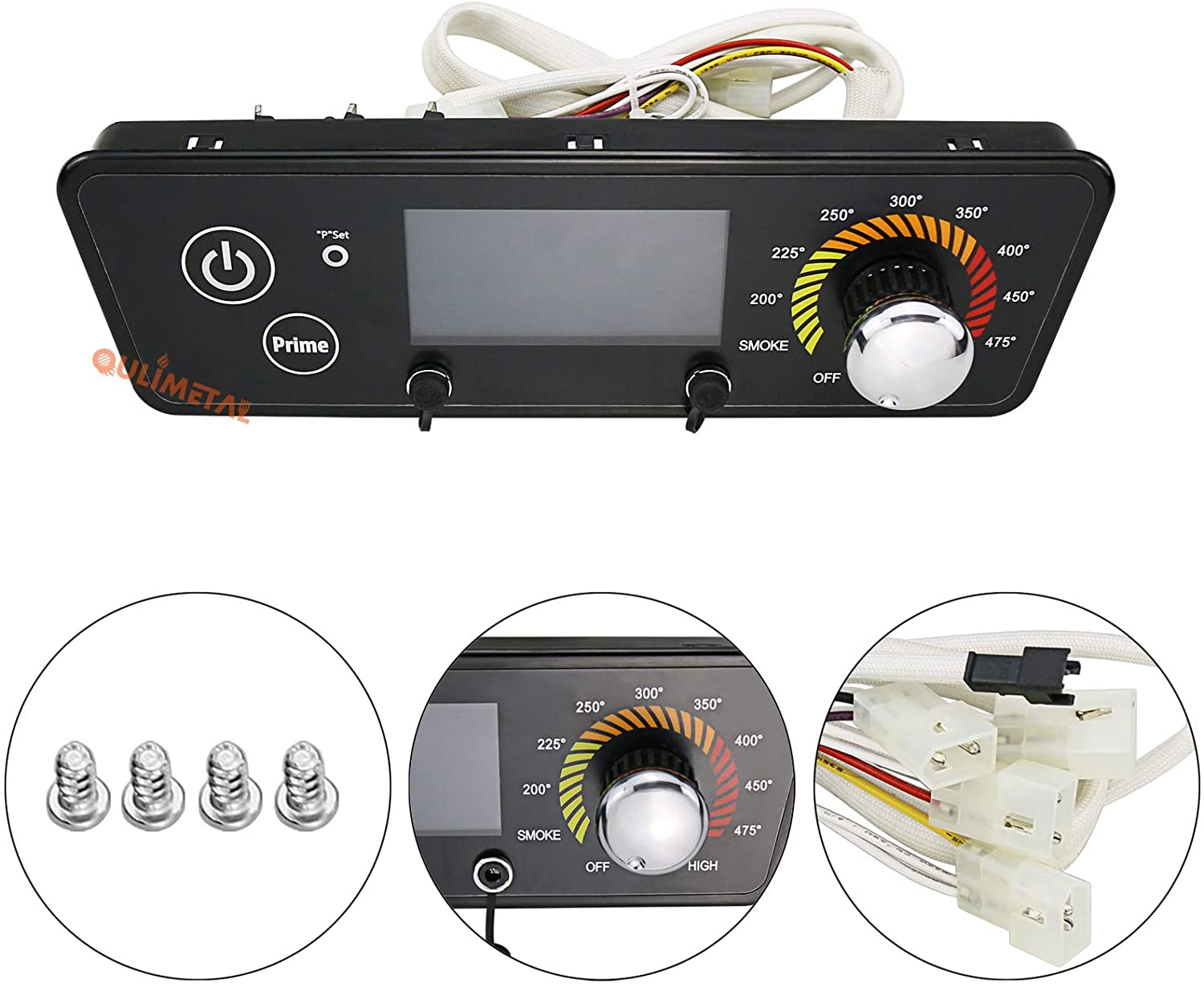
When your Pit Boss smoker won’t turn on despite good fuses, inspect the control board itself. Start with visual checks: Remove the controller lid (4 screws) and scan for burnt spots, swollen capacitors, or that telltale acrid “electrical burn” smell. One user diagnosed a failed board by noticing blackened areas near the power input terminals.
Critical Connection Reseating Process
Loose Molex connectors cause 30% of “dead board” misdiagnoses. Unplug every color-coded connector (they’re keyed to prevent misalignment), inspect for green corrosion, apply dielectric grease to pins, then press firmly until you hear a distinct click. Reassemble and test—this simple step revived a Professional Series smoker after the owner replaced two unnecessary controllers.
RTD Temperature Probe Fixes for “IT” Error Codes
Your RTD probe (the metal rod inside the cooking chamber) must read 1000-1200Ω at room temperature to function. Test it properly: Unplug the red wires from the controller, set multimeter to 2000Ω range, and touch probes to the terminals. Readings outside 1kΩ mean failure—but first try cleaning. Remove the probe and wipe its shaft with isopropyl-soaked cloth to remove carbon buildup that causes false “IT” codes.
When to Replace vs. Clean
Clean if: Resistance is near 1kΩ but unstable during testing (indicating surface contamination). Replace immediately if: Readings exceed 1500Ω or show open circuit—bent probes or internal damage can’t be repaired. OEM probes cost $15-25 online and install in 60 seconds by sliding into the firebox port.
Igniter Failure Symptoms That Stop Ignition
If your auger feeds pellets but no fire starts, your igniter has likely failed. Verify with this test: Unplug the igniter wires, set multimeter to 200Ω range, and check resistance across leads. Healthy igniters read 35-55Ω; open circuit (OL) means replacement. One 1000-series owner fixed his “no ignition” issue with a $22 Amazon igniter after confirming 0Ω resistance.
Avoid This Igniter Replacement Mistake
Never route new wires near the fire pot—they’ll melt within weeks. Follow the existing harness path along the smoker’s frame, securing with zip ties. Test before full reassembly: Power on and watch—the igniter should glow cherry red within 180 seconds. If not, double-check connections at the control board.
Auger Motor Troubleshooting for No-Pellet-Feed Issues
When your Pit Boss smoker won’t turn on properly and pellets aren’t feeding, check for jams first. Perform manual rotation: Disconnect power, empty the hopper, and use pliers to gently turn the auger shaft. It should spin freely—if stuck, clear obstructions with a shop vac and stiff brush. Never force it; stripped gears require motor replacement.
Motor Resistance Testing
Unplug the motor from the controller and test resistance across terminals. Healthy motors read 2-10Ω; readings near zero indicate a short, while OL means open circuit. For larger grills, avoid 1.6 rpm aftermarket motors—Pit Boss now uses 2.0 rpm OEM units that prevent feed issues. Community reports confirm 30% fewer jams with correct-spec replacements.
Post-Repair Verification That Prevents False Fixes
Before declaring victory, run this critical 15-minute test: Confirm fan startup within 30 seconds of power-on; watch auger cycles (4 seconds on, 6 seconds off during prime); verify igniter glow within 3 minutes; test temperature stability by setting 350°F for 15 minutes. One user thought his fix worked until realizing his auger cycled erratically—catching a loose harness connection before pellets piled up in the fire pot.
Warranty Considerations Before DIY Repairs
Pit Boss covers parts for 5 years—call 1-877-303-3134 with your serial number before self-repair. Email photos of failed components (fuses don’t qualify, but controllers do). Typical controller replacement takes 7-10 business days, but self-repair won’t void warranty if you use OEM parts. Aftermarket igniters and RTD probes are safe backups that won’t affect coverage.
Prevention Tips to Avoid Future Power Failures
Store your Pit Boss smoker indoors during extended off-seasons—moisture destroys electronics faster than use. Always empty the hopper before storage to prevent pellet swelling and auger jams. Cover your grill with ventilation gaps to avoid condensation buildup. Check connections quarterly—vibration from transport loosens plugs. Keep spare fuses and igniters in your grill toolbox for weekend emergencies. These simple habits prevent 80% of “Pit Boss smoker won’t turn on” scenarios.
Bottom line: When your Pit Boss smoker won’t turn on, start with power verification and fuse checks—most issues resolve in under 15 minutes. Reseating loose connections or replacing a $2 fuse will get you smoking again faster than waiting for warranty service. Keep this guide in your grill toolbox, and you’ll never cancel dinner plans due to a silent smoker again.
