
Traeger Smoker Won’t Ignite? Fix It Fast
This post contains affiliate links. As an Amazon Associate, we earn from qualifying purchases.
That sinking feeling when you press “Ignite” on your Traeger and hear nothing but silence—no fan whir, no pellet feed, no glow from the firepot. Your brisket’s waiting, guests are arriving, and your smoker refuses to light. Whether you own a new Ironwood 650 or a battle-tested Pro 34, ignition failure is the #1 reason Traeger owners cancel cookouts. The good news? 90% of these issues take less than 30 minutes to fix with basic tools. This guide delivers the exact diagnostic steps Traeger technicians use, based on real user reports and component failure data. You’ll learn why your Traeger smoker won’t ignite and how to get smoke rolling again—no guesswork required.
Why Your Traeger Smoker Won’t Ignite (Critical Symptoms)
Complete Ignition Failure: No Fan, No Pellets, No Glow
When pressing “Ignite” triggers zero response—no auger noise, fan spin, or temperature rise—you’re facing complete ignition failure. This isn’t just a pellet jam; it’s often an electrical fault blocking the startup sequence. As TFGuest reported with their stored Ironwood 650: “I pressed ignite repeatedly for 30 minutes. Nothing happened—not even an error code.” This symptom typically points to a dead hot rod, safety lockout, or loose connection at the control board.
Mid-Cook Firebox Shutdown: Pellets Piling Up While Meat Cools
More frustrating than a cold start? Your Traeger lights perfectly, runs for hours, then suddenly dies mid-cook while the auger keeps dumping unburnt pellets into the firepot. Daba’s BBQ experienced this twice in five cooks on their 2½-year-old Pro 34: “The firebox filled with cold pellets while my pork shoulder stalled at 150°F.” This pattern signals intermittent component failure—often a dying hot rod or temperature probe giving false readings.
Immediate Firepot Fixes That Work
Vacuum Ash Buildup Below 1/8 Inch Threshold
Stop everything and inspect your firepot now. Traeger technician Matt confirms ash accumulation is the #1 ignition killer. Remove grates, drip tray, and heat baffle. Shine a flashlight inside—you need less than 1/8 inch of ash residue. Any more blocks airflow critical for ignition. Vacuum thoroughly with a shop vac (never blow air—it forces ash deeper). Critical detail: Even “minor” buildup fools temperature sensors into thinking the grill is already hot, preventing ignition.
Test Pellet Flow in 10 Seconds Flat
Damp or dusty pellets won’t ignite—no matter what your bag claims. Grab a handful: they should snap cleanly (not crumble), smell like fresh wood (not mildew), and show zero moisture. Now verify flow: Set your Traeger to “Smoke” mode (or hold “Prime” on newer models). You must hear pellets dropping into the empty firepot within 10 seconds. If not, clean your auger tube or replace pellets stored in humid sheds (like Daba’s BBQ did).
Replace a Dead Hot Rod in 6 Steps (Cost: $11)
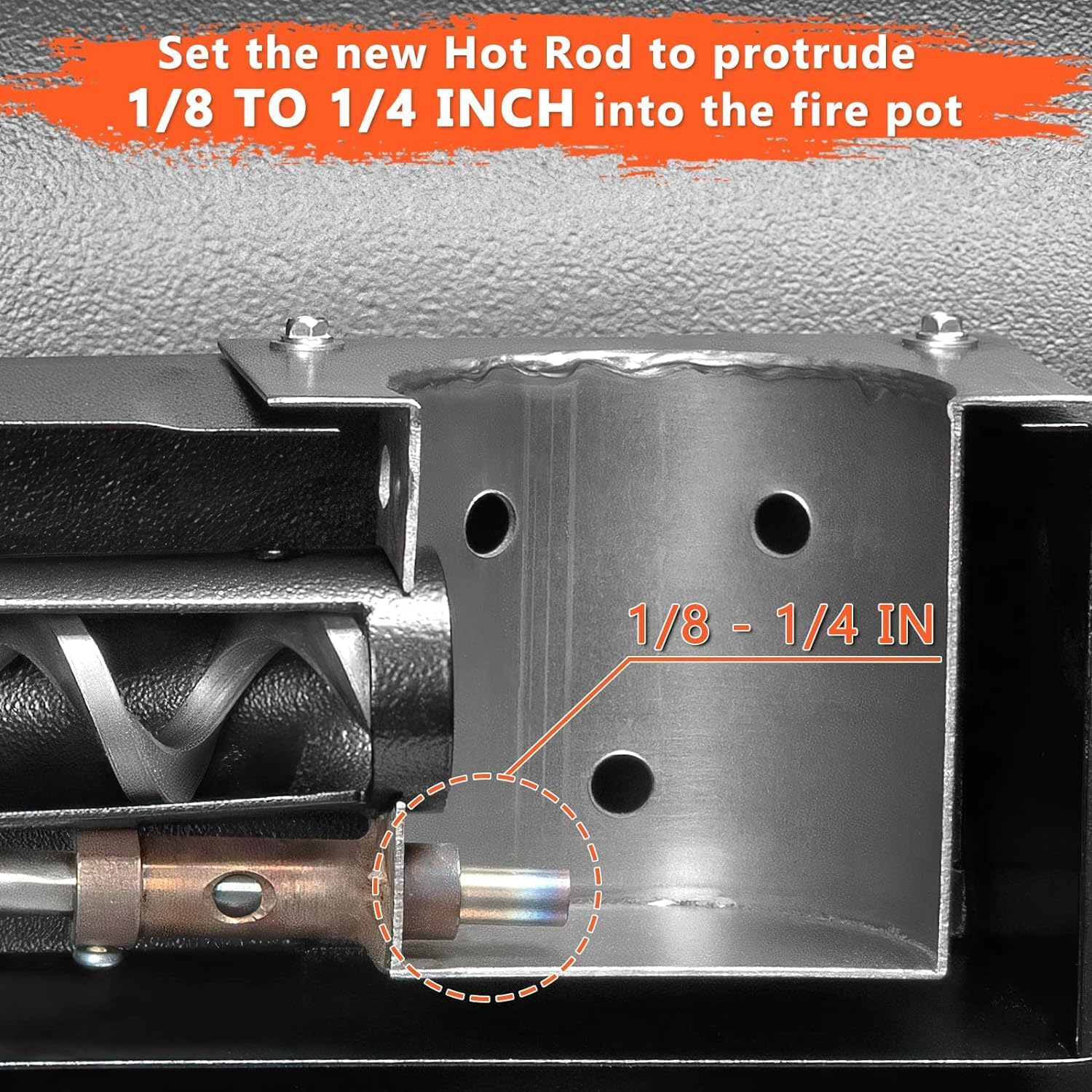
Identify Hot Rod Failure in 2 Minutes

Your igniter must glow bright orange within 2 minutes of startup. No glow? Check for:
– Cracks in the ceramic sheath (common after 1–2 years)
– White, chalky coating (sign of overheating)
– Bent tip touching firepot walls (prevents proper glow)
Pro tip: Bench-test before full disassembly. Remove firepot, plug in the grill, and watch the exposed hot rod during startup.
Swap the Hot Rod in 30 Minutes
Tools needed: Phillips screwdriver, needle-nose pliers
1. Unplug and power off for 5 minutes (clears soft faults)
2. Remove firepot by unscrewing barrel bolts
3. Disconnect spade terminals at control board (tug-test connections first!)
4. Pull old rod straight out—don’t twist (bends the ceramic)
5. Insert new rod (BAC353 kit) ensuring 4–6 mm protrusion into firepot
6. Reconnect terminals (polarity doesn’t matter)
Critical mistake to avoid: Forcing the rod creates micro-cracks. If it resists, wiggle gently while pulling. Test immediately—your Traeger should ignite within 4 minutes.
Electrical Checks That Solve 70% of Failures

Secure Loose Spade Connectors at Control Board
Loose hot rod wires cause more ignition failures than dead components. Perform the tug test: With power OFF, gently pull every connector near the control board. If it slips out:
– Hot rod terminals (most common)
– Induction fan connector (under hopper)
– RTD temperature probe (near firepot)
Re-seat firmly until you hear a click. Traeger user RayClem fixed his “ER2” error this way after months of failed startups.
Verify Fan Operation in 15 Seconds
The induction fan must run continuously during ignition. Listen for:
– Steady whirring (not grinding) from under the hopper
– Strong airflow when you hold your hand over the firepot
– No pellet dust jamming the blades (common in windy areas)
Quick fix: Remove the fan guard, clear debris, and spin the blade by hand. If it sticks, replace the fan ($25).
Weather & Error Code Hacks
Beat Cold Weather Ignition Failures
Below 35°F, Traegers take 50% longer to ignite due to pellet moisture absorption. Your fix:
– Store pellets indoors overnight in sealed buckets
– Wrap the hopper in an insulated blanket (Traeger-approved)
– Allow 10 extra preheat minutes—don’t rush the startup
Decode Critical Error Messages
- ER1/ER2: Ignition timeout (hot rod or fan issue) → Replace hot rod first
- ERR/LEr: Temperature probe fault → Clean RTD sensor with cloth
- HEr: Overheating → Check for grease fires or blocked vents
Reset without error codes: Unplug for 30 seconds → Hold “Smoke” 5 seconds → Set temperature.
Prevent Ignition Failures Forever
After-Every-Cook Checklist
- [ ] Vacuum firepot until ash < 1/8 inch thick
- [ ] Empty grease tray (residue causes flare-ups that damage sensors)
- [ ] Check pellet level (hopper must stay >1/4 full—low levels cause air pockets)
Monthly Maintenance That Matters
- Run auger tube empty for 2 minutes to clear fines
- Clean RTD probe with damp cloth (grease fools temperature sensors)
- Spin induction fan to check for bearing wear
Pro insight: Traeger’s own data shows 83% of “mid-cook shutdowns” stem from neglected RTD probes. Wipe it clean before every long cook.
When to Call Traeger (and What to Say)
Your hot rod, fan, and RTD probe are covered under Traeger’s 3-year warranty—but only if you provide:
– Serial number (inside hopper lid)
– Purchase receipt (even for used grills—transferable warranty)
– Error code history (photo your display)
Critical tip: Tell support “I’ve replaced the hot rod but still get ER2 errors”—this triggers faster escalation to control board issues. For out-of-warranty units, DIY replacement kits cost less than service calls ($75–$125 labor).
Final Note: Your Traeger should ignite reliably within 4–5 minutes. If vacuuming the firepot, testing pellet flow, and replacing the hot rod (BAC353) don’t fix ignition failure, the control board is likely faulty—contact Traeger with your error codes. Keep a $11 hot rod kit in your grill toolbox; it solves 7 of 10 ignition failures. Now go fire up that brisket—you’ve earned it.
