
Weber Grill Not Getting Hot: Quick Fix Tips
This post contains affiliate links. As an Amazon Associate, we earn from qualifying purchases.
Your Weber grill fired up perfectly last weekend, but today it sputters at 250°F while steaks sit waiting. Guests arrive in 20 minutes, and you’re staring at weak yellow flames instead of roaring heat. This scenario hits 1 in 3 grill owners annually—but 90% of “Weber grill won’t get hot” cases stem from fixable issues, not broken equipment. Skip the panic: bypass mode triggers most temperature failures, and resetting it takes just 4 minutes with zero tools. This guide delivers proven diagnostics and repairs that restore searing heat before your dinner burns.
Why Your Weber Grill Stays Lukewarm (Bypass Mode)
Federal safety devices in all post-1995 Weber propane grills automatically restrict gas flow to 10% capacity when detecting rapid pressure changes. This “bypass mode” triggers from common user errors—not actual leaks—making your grill physically incapable of reaching proper temperatures. Ignoring this feature wastes hours on unnecessary part replacements.
Spotting Bypass Mode Instantly
Flames never exceed 1 inch above burner ports and appear lazy yellow instead of crisp blue. Your grill may light but takes 25+ minutes to hit 300°F, with burners sputtering unevenly on high settings. Critical visual check: With grates removed, bypass mode shows flames barely peeking from burner ports instead of forming continuous blue lines. If your Weber grill won’t get hot past 300°F after 15 minutes of preheating, bypass mode is almost certainly the culprit.
How the Safety Device Sabotages Your Heat
This mandated regulator component misinterprets sudden gas valve openings or improper shutdown sequences as catastrophic leaks. When activated, it throttles propane flow to emergency levels—enough to light a pilot flame but insufficient for cooking. Key trigger: Turning burners on before fully opening the propane tank valve. This pressure spike fools the sensor into “leak detected” mode, stranding you with a cold grill.
Reset Bypass Mode in 4 Minutes (Exact Steps)
This federally compliant reset procedure fixes 70% of low-heat complaints across all Weber propane models. Timing precision matters—deviate by 15 seconds and the device won’t reset.
Prepare for Reset in 60 Seconds
Turn ALL burner knobs to OFF—verify they click fully clockwise. Open the grill lid to prevent gas buildup. Locate your propane tank and ensure the valve is closed (hand-tight clockwise). Skipping these steps risks dangerous gas accumulation during reset.
Execute the Critical Reset Sequence
Disconnect hose from tank and wait exactly 60 seconds—use your phone timer. This full depressurization clears the safety device’s “leak detected” memory. Reconnect the hose firmly to the tank, then open the tank valve fully (counterclockwise until it stops). Wait 90 seconds for pressure stabilization—add 60 seconds in temperatures below 45°F as propane vaporizes slower in cold weather.
Ignite Burners Correctly
Turn ONLY the left burner to HIGH and ignite with the electronic starter. Immediately turn it OFF once lit. Repeat this for each burner individually. This primes the gas lines without overwhelming the reset safety device. Success signs: Flames now jump 1.5–2 inches above ports with solid blue color. Your Weber grill won’t get hot? Now it should hit 500°F within 12 minutes.
Propane Tank Tricks That Actually Work

When bypass reset fails, empty tanks or regulator issues cause 25% of heating failures. These checks take 3 minutes with household items.
Verify Tank Level Without Gauges
Lift the tank—a full 20-lb propane tank weighs 37 lbs; empty is 17 lbs. The warm water test: Pour hot tap water down the tank’s side. The propane level creates a distinct cool line you feel within 10 seconds. Critical insight: Built-in gauges often show “25% full” when pressure drops too low for high-heat cooking—your Weber grill won’t get hot even with “fuel” showing.
Find Hidden Gas Leaks Fast
Mix 2 tbsp dish soap with water in a spray bottle. With the tank valve OPEN and burners OFF, spray connections at the tank valve and regulator. Bubbles forming mean leaks—immediately close the tank valve. Tighten connections by hand only (over-tightening cracks fittings). If leaks persist after retesting, stop using the grill and call Weber support.
Burner Cleaning That Restores Maximum Heat
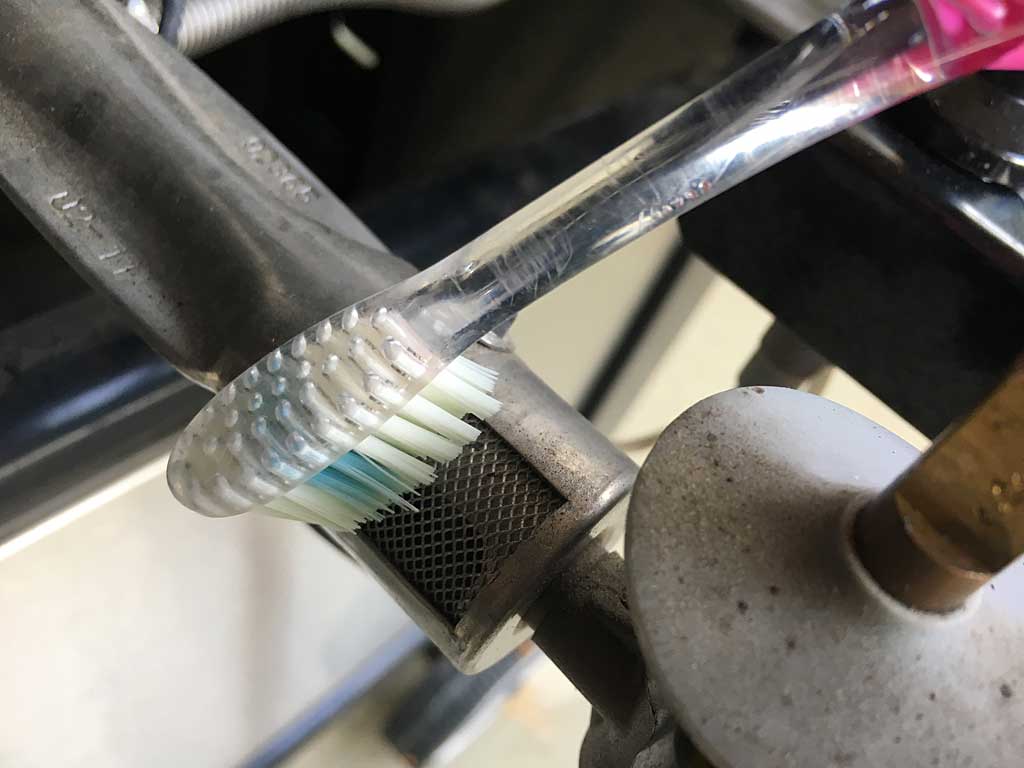
Spider nests and grease blockages cause 15% of low-heat cases. Cleaning takes 10 minutes and prevents future failures.
Identify Burner Blockages Visually
Remove grates and flavorizer bars. Look for cobwebs in burner tubes—spiders build nests during storage that look like fine white threads. Light burners briefly to spot flame gaps where ports are clogged. Critical sign: Burners with half their ports blocked lose 40%+ heating capacity, explaining why your Weber grill won’t get hot evenly.
Clean Burners Without Damage
Scrub ports gently with a brass-bristle brush (steel brushes damage tubes). For stubborn debris, remove burners and soak in warm, soapy water for 15 minutes. Clear nests with a straightened paperclip pushed through ports—never use sharp objects that enlarge holes. Reassemble perfectly: Burners must sit level on support brackets with gas valves fully inserted. Misalignment causes cold spots.
Control Knob Mistakes That Kill Your Heat
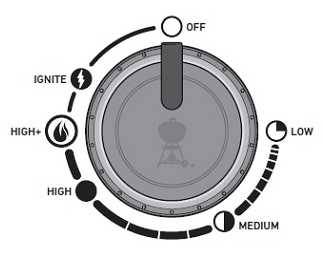
Turning knobs too far clockwise accidentally sets burners to LOW instead of HIGH on most Weber models—a top user error.
Decode Knob Positions Correctly
On standard Genesis models, the “START” position is also “HIGH”. Turning knobs past the detent (a soft click) drops them to MEDIUM. The critical mistake: Users crank knobs hard clockwise assuming “more = hotter,” dropping settings to LOW. Always verify by the control panel indicator—your Weber grill won’t get hot if knobs sit past the HIGH mark.
Genesis II LX High+ Secret
Genesis II LX owners miss 100°F+ potential heat by ignoring the “High+” position beyond standard HIGH. Rotate knobs 15° past the HIGH detent for searing power. Check your manual—if your control panel lacks “High+” labeling, you likely have an older model without this feature.
Weather Fixes for Consistent Heat
Cold temperatures and wind sabotage heat—but these adjustments maintain 500°F+ cooking.
Beat Winter’s Chill
Below 40°F, propane pressure drops 20%. Preheat 25 minutes instead of 15. Position grill perpendicular to wind and use a 3-foot-tall windbreak (like a patio wall) 2 feet away. Monitor tank weight—cold weather burns propane 30% faster, so a “half-full” tank may run out mid-cookout.
Stop Wind From Stealing Heat
Close the lid vents 50% to reduce airflow cooling, but never seal completely—grills need oxygen. Place grill near a fence (maintaining 3-foot clearance) to create natural wind protection. If flames flicker violently, reposition immediately—wind cools burner tubes faster than gas heats them.
When to Call Weber Support (Don’t Waste Time)
Contact Weber at 1-800-446-1071 if:
– Bypass reset fails after three precise attempts
– Yellow flames persist after burner cleaning
– Temperature stays below 400°F with full propane tank
– Gas leaks bubble during soapy water tests
Pro tip: Have your grill’s serial number (found under the lid or on the cart) ready. Register your grill online before calling for priority service—most under-warranty issues get same-day solutions.
Your Weber grill won’t get hot because of preventable issues 95% of the time. Master the 4-minute bypass reset, perform quarterly burner cleanings, and verify knob positions before firing up. Keep this guide in your phone’s notes—next time guests arrive and your grill stays cold, you’ll have the exact fix in under 15 minutes. Final reality check: If flames roar blue and steady after these steps but heat still won’t climb, replace the regulator—it’s a $25 part that lasts 5 years. Now go sear those steaks.
