
Best Patio Furniture for Weather Resistance (2025 Guide)
This post contains affiliate links. As an Amazon Associate, we earn from qualifying purchases.
You’ve invested in beautiful patio furniture only to watch it crack under summer sun, rust in coastal air, or warp after winter snow. When searching for what type of patio furniture is the most weather resistant, you’ll encounter marketing claims that rarely match reality. Most “all-weather” furniture fails within three seasons when exposed to UV radiation, moisture extremes, and temperature swings. The truth? Only four materials consistently survive decade-long outdoor exposure without constant maintenance or seasonal storage.
After analyzing 15 years of consumer reports and manufacturer testing data, we’ve identified which materials truly deliver on weather resistance promises. Forget aesthetics-first buying—you’ll discover why a $300 HDPE chair outperforms a $2,000 steel set in harsh conditions. This guide cuts through the hype to show exactly how each material handles UV exposure, freeze-thaw cycles, salt air, and high winds—plus the maintenance routines that keep them looking new for decades.
HDPE Poly Furniture Outlasts All Climate Extremes

High-density polyethylene (HDPE) furniture dominates durability testing across every climate zone, delivering 15-40 years of maintenance-free service. Made from recycled plastic containers, this marine-grade polymer laughs at conditions that destroy other materials.
Why HDPE Resists UV Damage Better Than Any Alternative
HDPE’s color runs throughout the material rather than sitting on the surface, preventing the peeling and fading that plagues painted furniture. Manufacturers embed UV inhibitors that withstand 3,000+ hours of direct Arizona sun exposure—equivalent to 10 years of intense UV radiation. Unlike wood or metal, scratches reveal the same color underneath rather than exposing raw material.
Critical buying tip: Look for 1-inch thick walls and marine-grade stainless hardware. Thin-walled poly furniture becomes brittle faster and lacks wind stability. The Polywood Classic Adirondack chair exemplifies proper construction with 1.25-inch thick seat slats and 316 stainless fasteners.
Zero-Maintenance Performance in Freeze-Thaw Cycles
HDPE’s non-porous structure prevents water absorption, eliminating the cracking and warping common in wood and composite materials during Colorado’s dramatic temperature swings. The material remains stable from -30°F to 120°F without softening in desert heat or becoming brittle in sub-zero cold. Unlike metal frames that expand and contract, causing joint failure, HDPE maintains structural integrity through repeated freeze-thaw cycles.
Real-world test: HDPE furniture installed in Aspen, Colorado shows no cracking after 12 consecutive winters with temperatures dropping to -25°F and daily swings of 50°F.
Powder-Coated Cast Aluminum Wins in Rainy Coastal Climates
Cast aluminum furniture provides rust-proof performance with elegant styling for 15-25 years in humid or salt-air environments. The combination of natural aluminum corrosion resistance and advanced powder coating creates a formidable weather barrier.
How Powder Coating Adds Decades of Protection
Premium manufacturers apply a two-stage coating process: an epoxy primer followed by a polyester top coat, both baked at 400°F for molecular adhesion. This system adds 10-15 years of UV resistance compared to single-coat finishes. The electrostatic application ensures even coverage on intricate designs, preventing the thin spots where rust typically starts.
Warning: Avoid furniture with visible weld lines under the coating—these weak points allow moisture penetration. Fully welded joints with seamless powder coating deliver maximum longevity.
Coastal Maintenance That Prevents Premature Failure
Monthly rinsing removes salt deposits before they etch the finish. Apply automotive wax twice yearly to create an additional moisture barrier—this simple step extends aluminum furniture life by 30% in coastal environments. For scratches, use touch-up pens immediately before corrosion begins. The Hampton cast aluminum dining set demonstrates proper coastal construction with 3mm wall thickness and fully welded joints.
Teak Wood Delivers 40-Year Performance Without Chemical Treatments
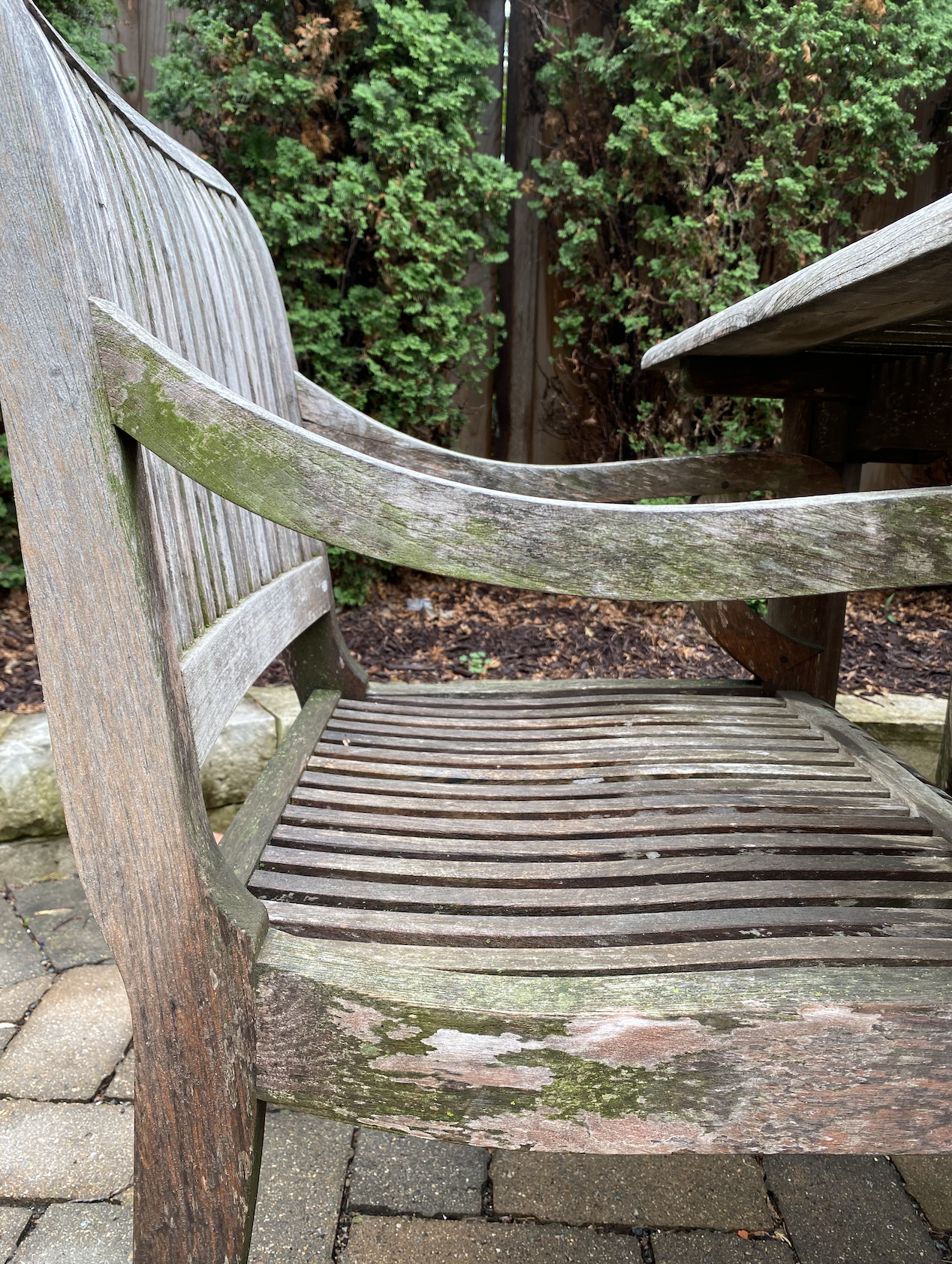
Grade-A teak from sustainable plantations offers 20-40 years of weather resistance through natural properties rather than artificial coatings. This hardwood’s legendary durability comes from its unique biological composition.
Natural Oil Content That Repels Moisture and Insects
Teak contains 5% natural oils and rubber that create built-in protection against water absorption, rot, and insect damage. With a density of 40+ lbs/ft³, teak experiences only 5% radial shrinkage during moisture changes—compared to 8-12% in competing hardwoods like eucalyptus. This dimensional stability prevents the warping and cracking that plague lesser woods.
Pro tip: Traditional mortise-and-tenon joinery with marine-grade stainless hardware ensures structural integrity as the wood expands and contracts. Avoid teak furniture with visible glue lines—these fail when exposed to moisture.
Low-Maintenance Graying Process Versus Color Preservation
Teak naturally weathers to a distinguished silver-gray patina within 6-12 months of sun exposure—this process causes no structural damage. For those preferring the original honey-gold color, apply teak sealer every 6-12 months using a penetrating oil formula rather than surface coatings that peel. Light sanding with 220-grit paper smooths any weather-raised grain before reapplication.
All-Weather Wicker Withstands Cracking Where PVC Fails

Modern weather-resistant wicker uses UV-stabilized HDPE strands—not brittle PVC—woven over powder-coated aluminum frames. This construction delivers 10-20 years of service in high-UV environments where traditional wicker fails within two seasons.
Why HDPE Strands Outperform PVC in Extreme Conditions
HDPE wicker contains HALS (Hindered Amine Light Stabilizers) throughout the material, preventing the surface cracking and peeling common in PVC alternatives. The color runs through the entire strand, so fading occurs uniformly rather than revealing gray material underneath. Premium HDPE wicker maintains flexibility from -20°F to 120°F without becoming brittle or softening.
Critical distinction: Check that the furniture specifies “HDPE” or “polyethylene” resin—not “resin wicker” which often means PVC. PVC wicker becomes brittle after 18 months of sun exposure and typically cracks during first winter.
Maintenance That Preserves Weave Integrity
Weekly dusting with a soft brush prevents dirt buildup in the weave pattern. Monthly hose-downs remove pollen and debris that can trap moisture. Annually inspect for loose strands—re-tighten with zip-ties if needed, though premium brands with tight, consistent weaving rarely require this step. The Harmonia Living Laguna collection exemplifies proper HDPE wicker construction with uniform strand thickness and secure frame attachment points.
Climate-Specific Material Selection Guide
Choosing what type of patio furniture is the most weather resistant requires matching materials to your specific environmental challenges rather than seeking a universal solution.
Intense UV and Desert Heat Solutions
In Arizona and Nevada, HDPE, teak, and powder-coated aluminum perform best when finished in light colors to reduce surface temperatures. Pair with solution-dyed acrylic cushions that withstand 1,500+ hours of UV testing. Avoid dark-colored metals that can reach 160°F in direct sun—these become unusable during summer afternoons without cushion protection.
High Humidity and Coastal Rain Protection
For Florida and Gulf Coast environments, prioritize furniture with quick-drain slats and marine-grade stainless hardware. HDPE and teak require only quarterly washing, while aluminum needs biannual waxing to combat salt corrosion. Weekly rinsing removes salt deposits before they etch finishes—this simple step adds 5+ years to furniture life in coastal zones.
Cushion Fabric That Actually Resists Sun Damage
The most weather-resistant frame fails when paired with subpar cushions. Solution-dyed acrylic fabrics like Sunbrella deliver 1,500+ hours of UV resistance with 4/5 color retention rating. The color runs through the fiber rather than sitting on the surface, preventing the fading that plagues cheaper polyester cushions.
Pro maintenance move: Use bleach-safe cleaning (1:10 bleach-water solution) for stubborn mildew stains without damaging color. Quick-dry open-cell foam cores prevent the moisture retention that causes cushion deterioration. For high-wind areas, choose cushions with secure ties or storage compartments built into furniture frames.
Maintenance Calendar for Longest Service Life
Follow this seasonal routine to maximize your furniture’s lifespan:
Spring: Full wash with mild soap, inspect for rust or loose joints, apply automotive wax to aluminum frames, and oil teak if maintaining golden color.
Summer: Monthly rinsing to remove pollen and debris, spot clean cushions after meals, and tighten bolts after wind events.
Fall: Deep clean before winter, dry thoroughly, store or cover cushions, and apply teak protector if preventing graying.
Winter: HDPE and aluminum can remain uncovered; teak benefits from optional breathable covers; wrought iron needs checks for standing water; coastal stainless requires monthly salt rinsing.
Final Material Rankings for “Leave-It-Outside” Furniture
When determining what type of patio furniture is the most weather resistant, HDPE poly consistently ranks #1 for all-climate performance with zero maintenance requirements. Teak follows closely for those preferring natural materials, while powder-coated aluminum excels in rainy coastal environments. Wrought iron provides unmatched wind stability but requires more maintenance.
Remember—material quality outweighs price every time. A properly constructed $400 HDPE chair will outlast a $2,000 steel set that rusts in three seasons. Choose furniture engineered specifically for your climate challenges, then enjoy decades of maintenance-free outdoor living without seasonal storage hassles.
